For most households, a fine-grained, unscented, hard-clumping sodium bentonite clay litter gives the best real-world odor control, because it isolates urine into a solid mass you can remove entirely before it breaks down into ammonia. Odor control is far more dependent on clump integrity and scooping frequency than on any deodorizing additive — and added fragrance masks smell without reducing it, while making litter box rejection more likely.
Key takeaways
- Odor control is mostly about removal, not absorption. The litter that lets you take the waste out intact will beat the one that merely soaks it up.
- Hard-clumping sodium bentonite clay remains the strongest all-round performer for odor, especially in multi-cat homes.
- Scented litter does not reduce odor — it adds a second smell on top, and is one of the more common reasons cats stop using the box.
- Fine grain size improves both clumping and cat acceptance; most cats prefer a sand-like texture.
- Depth matters: 7–10 cm of litter allows clumps to form fully instead of cementing to the bottom of the pan.
Every litter on the shelf claims odor control, and almost none of them explain what that actually means. Some absorb moisture. Some raise pH to slow bacterial growth. Some just add fragrance. These are very different mechanisms, and they perform very differently in a real home with real cats.
This guide explains how litter odor control actually works, which specifications are worth paying for, and how to choose based on your household rather than the marketing on the bag.
How Litter Box Odor Actually Forms
Fresh cat urine is not especially smelly. The problem starts when bacteria break down urea into ammonia, which begins within hours and accelerates in warmth and humidity. Feces contribute sulphur compounds and volatile fatty acids on a similar timeline.
This gives you the single most useful principle in the whole category:
The core principle
Odor control is primarily about removal, not absorption. A litter that lets you lift waste out completely, before it has time to decompose, will outperform a litter that merely soaks it up and holds it in the pan.
That is why clump integrity matters more than any deodorizing additive. If clumps crumble when you scoop, you leave saturated fragments behind, and those fragments carry on generating ammonia between changes. Our guide to why a litter box smells even after cleaning goes deeper into where that residual odor hides.
The chemistry behind cat odor specifically — including felinine and the sulphur compounds that make male cat urine so much worse — is covered in our science of cat odor explainer.
The Specifications That Actually Matter
1. Clumping strength
The most important single factor. A good clumping litter forms a hard, self-contained mass within minutes and holds together under a scoop.
Test it yourself: pour a little water onto a small pile, wait five minutes, then lift the clump. If it holds its shape and does not shed loose granules, the litter is doing its job. If it crumbles, urine is being left behind at every scoop.
Our clumping vs. non-clumping comparison covers this trade-off in detail, including the cases where non-clumping genuinely makes more sense.
2. Grain size
Finer grains have more surface area, which means faster moisture absorption and tighter clumps. They also happen to match what most cats instinctively prefer — a sand-like texture close to what they would choose outdoors.
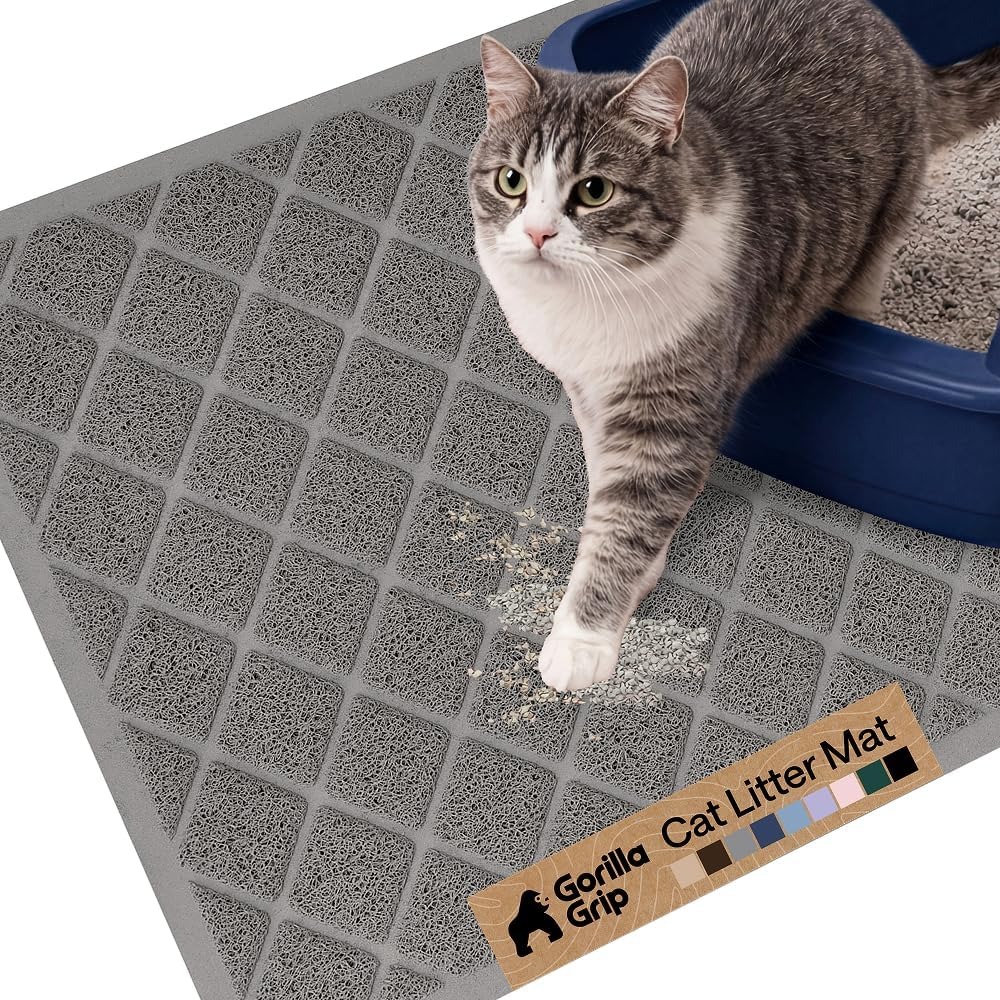
The trade-off is tracking. Fine litter travels on paws. A good mat solves most of it; our guide on stopping litter tracking covers the rest.
3. Absence of fragrance
This is worth being blunt about: added fragrance does not reduce odor. It adds a smell on top of the existing one.
Worse, it works against you. A cat's sense of smell is roughly fourteen times more sensitive than ours. What reads as a pleasant lavender note to you is overwhelming inside a covered box, and scented litter is one of the more common causes of a cat deciding the box is no longer acceptable. If your cat has started going elsewhere, our guide on cats refusing to use the litter box covers this and the other usual triggers.
4. Dust level
Dust is a respiratory irritant for both of you, and it settles as a film around the box that itself holds odor. Low-dust formulations are worth the premium, particularly in a small flat or a room without much ventilation.
5. Moisture capacity
How much liquid a given volume can hold before it saturates. This determines how long the box performs well between full changes — critical in multi-cat homes, where our multi-cat litter guide covers the extra demands.
Litter Types Compared for Odor Control
Sodium bentonite clay — the benchmark
How it works: the clay swells on contact with liquid and seals urine into a hard clump.
Odor performance: the strongest all-round option. The clumps come out intact, so urine leaves the box before it degrades.
Trade-offs: heavy, strip-mined, not biodegradable. Cheaper clay litters can be dusty.
Best for: most households, and especially multi-cat homes.
Dr. Elsey's Ultra Premium is the reference point in this category — unscented, fine-grained, and with clumps hard enough to survive being lifted out whole. Our roundup of the best cat litters covers the wider clay field.
Corn and wheat — the strong plant-based option
How it works: natural starches clump; plant enzymes help suppress the bacterial activity that produces ammonia.
Odor performance: genuinely good, close to clay in normal use.
Trade-offs: more expensive, and the corn base can attract pantry moths if stored in a warm cupboard rather than a sealed container.
Best for: owners who want strong performance with a lower environmental cost.
World's Best Cat Litter is the established option here. Our eco-friendly litter guide compares it against the other sustainable choices.
Wood pellets — good on ammonia, poor on removal
How it works: pellets absorb urine and disintegrate into sawdust, which falls through a sifting tray. Natural wood compounds are effective against ammonia specifically.
Odor performance: very good on urine ammonia. Weaker on feces, which sits on the surface.
Trade-offs: hard texture that many cats dislike, and it needs a sifting system to work properly.
Silica crystals — front-loaded performance
How it works: porous silica gel absorbs moisture and lets water evaporate, concentrating solids inside the crystal.
Odor performance: excellent for the first week, then declines noticeably as the crystals saturate.
Trade-offs: high cost, and the texture is disliked by a fair number of cats. Solid waste has to be removed daily regardless.
Best for: single-cat homes where the owner wants a longer interval between changes.
Paper — the gentle option
How it works: recycled paper absorbs liquid; usually non-clumping.
Odor performance: the weakest of the group. Saturates quickly and holds urine in the pan.
Best for: post-surgical use and very young kittens, where dust and clumping risk matter more than odor. Our kitten litter training guide explains why non-clumping is the safer choice at that age.
Quick Comparison
| Litter type | Odor control | Clumping | Cat acceptance | Cost |
|---|---|---|---|---|
| Sodium bentonite clay | Excellent | Excellent | High | Low |
| Corn / wheat | Very good | Good | High | High |
| Wood pellets | Good on ammonia | None (sifts) | Moderate | Low |
| Silica crystals | Good, then declines | None | Moderate | High |
| Recycled paper | Fair | None | High | Moderate |
Getting More From the Litter You Already Have
Switching product is only part of it. These changes often make a bigger difference than the brand on the bag.
Use enough litter. Aim for 7–10 cm of depth. Shallow litter lets urine reach the pan floor, where clumps cement to the plastic and shatter when you scoop.
Scoop twice a day. This single habit outperforms every premium feature on the market. Our guide on how often to clean a litter box sets out a realistic schedule, and how often to change litter completely covers full replacement intervals.
Deal with the bin as well. Scooping into an open bin beside the box just relocates the smell. A sealing disposal system such as the Litter Genie Plus contains it — our Litter Genie review covers whether the refill cost is worth it.
Size the box properly. It should be about one and a half times your cat's body length. Cramped boxes get used badly and soil unevenly.
Replace the pan itself annually. Plastic develops fine scratches that hold urine, and eventually no amount of washing will make the pan smell clean.
Reconsider a hood. Covered boxes trap odor inside, which is pleasant for you and unpleasant for your cat. Our covered vs. uncovered comparison covers the trade-off honestly.
Use a fragrance-free deodorizer if you need one. A product like NonScents works by adsorption rather than masking, and mixes into any litter. It supplements good habits rather than replacing them.
Changing litter without upsetting your cat
Transition over 7 to 10 days. Start with roughly a quarter new litter mixed into the old, and increase the proportion every couple of days. Abrupt switches are a common trigger for a cat deciding to go elsewhere — and once that habit starts, you are dealing with cleaning cat urine out of the house as well.
When Odor Is a Medical Signal
A sudden, sharp change in how the litter box smells is worth paying attention to rather than covering up.
- Unusually strong ammonia smell can indicate concentrated urine, which may point to dehydration or early kidney disease.
- A sweet or fruity note can be associated with diabetes.
- Markedly foul-smelling stool, or a sudden change in consistency, warrants a vet call.
- Blood, or urine volumes that are much larger or smaller than usual, should be checked promptly. Our guide on blood in cat litter covers what is urgent.
Worth a call
If your cat is straining in the box, visiting far more often than usual, crying while urinating, or producing nothing at all, contact your vet the same day. A urethral blockage — most common in male cats — can become life-threatening within 24 to 48 hours.
The Bottom Line
The best cat litter for odor control is the one that lets you get waste out of the box completely and quickly, in a texture your cat is happy to use. For most people that is a fine-grained, unscented, hard-clumping clay. Plant-based clumping litters are a genuine alternative at a higher price, and crystals suit single-cat homes that want longer intervals.
Whatever you buy, the habits matter more than the bag: enough depth, twice-daily scooping, a sealed bin, a big enough box, and no added fragrance. Get those right and almost any decent clumping litter will keep a home smelling clean.
Side-by-side comparison
Selected by Sarah Jenkins, Certified Veterinary Technician (CVT)
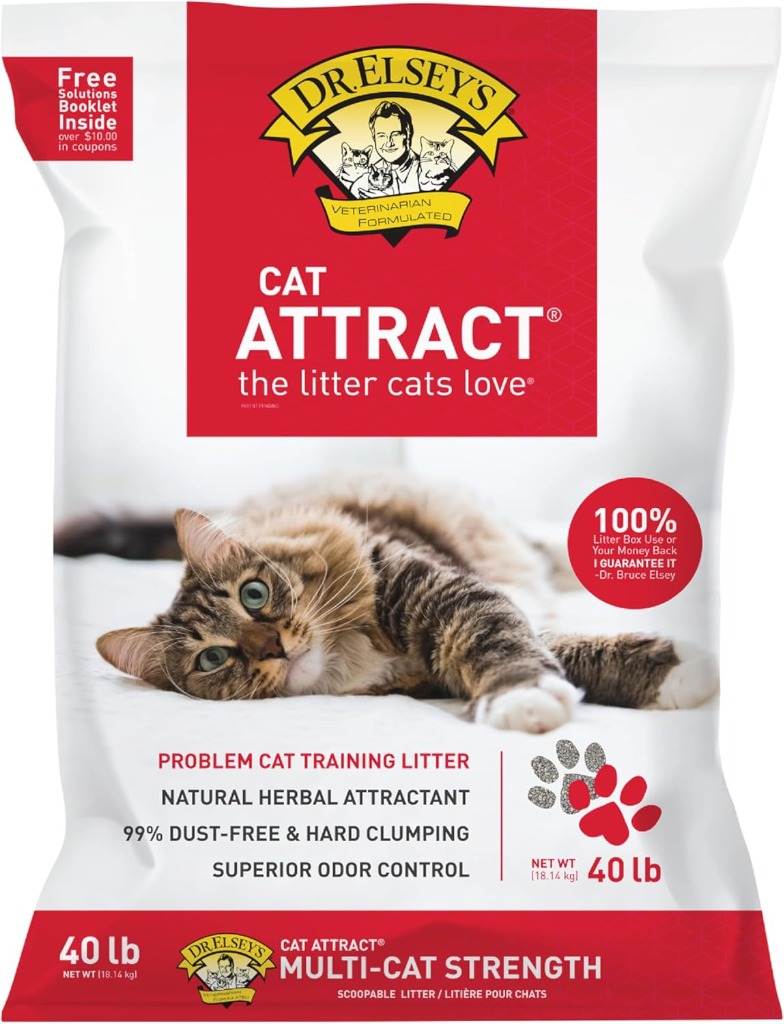 Dr. Elsey's Ultra Premium Clumping Cat Litter
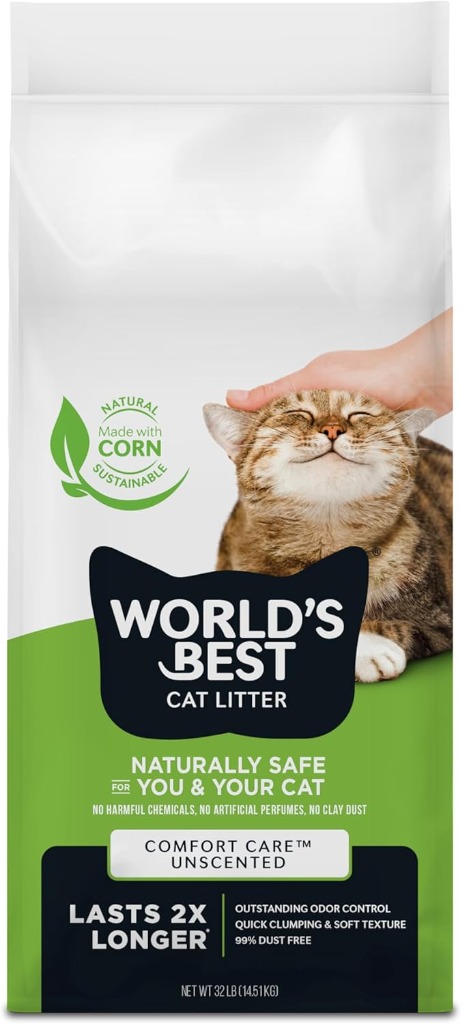 World's Best Cat Litter (Corn-Based)
 NonScents Cat Litter Deodorizer
As an Amazon Associate, PetMessFix earns from qualifying purchases. You pay the same price — we earn a small commission at no extra cost to you.
Frequently asked questions
What is the best cat litter for odor control overall?
A fine-grained, unscented, hard-clumping sodium bentonite clay litter is the strongest all-round performer for most households. It forms solid clumps quickly, which lets you remove urine completely before bacteria convert urea into ammonia. Plant-based clumping litters such as corn or wood are close behind and are lighter and more sustainable, at a higher cost per litre.
Does scented cat litter help with smell?
No. Fragrance masks odor rather than reducing it, so you end up smelling perfume plus ammonia instead of ammonia alone. Cats also have a far more sensitive sense of smell than we do, and heavily scented litter is a well-recognised trigger for litter box avoidance. Unscented is the better choice in almost every case.
How deep should cat litter be for good odor control?
Roughly 7 to 10 centimetres, or three to four inches. Too shallow and urine reaches the pan floor, where clumps cement to the plastic and break apart when you scoop, leaving residue that keeps producing odor. Too deep and some cats will refuse to use it, and you simply waste litter.
Do crystal or silica litters control odor better?
Silica crystals absorb moisture very effectively and control odor well for the first week or so. The limitation is that solid waste sits on the surface and urine residue accumulates inside the crystals with nowhere to go, so performance drops off sharply toward the end of the cycle. They suit single-cat homes; they struggle in multi-cat households.
Will a deodorizer fix a litter box that already smells?
Only partly. A fragrance-free deodorizer that works by adsorption can meaningfully reduce odor between full changes, but it cannot compensate for infrequent scooping, a box that is too small, or a pan that has absorbed odor into scratched plastic. Fix those first, then use a deodorizer as a supplement.
Products recommended in this guide
Dr. Elsey's Ultra Premium Clumping Cat Litter
Best for: Superior clumping performance for adult cats
- Hard, fast-forming clumps that lift out without crumbling
- Unscented and fine-grained — high acceptance rate with fussy cats
- Very low dust for a clay litter
- Heavy to carry and store
- Not biodegradable or flushable
World's Best Cat Litter (Corn-Based)
Best for: 100% natural, outstanding odor control, flushable
- Plant-based and lighter to handle than clay
- Clumps well for a non-clay litter
- Flushable in small amounts where local rules allow
- Costs more per litre than clay
- Corn base can attract pantry pests if stored badly
NonScents Cat Litter Deodorizer
Best for: Eliminating persistent litter box odor between changes
- Fragrance-free — works by adsorption rather than masking
- Mixes into any litter type
- Useful stopgap in multi-cat homes between full changes
- An addition to good scooping habits, not a replacement for them
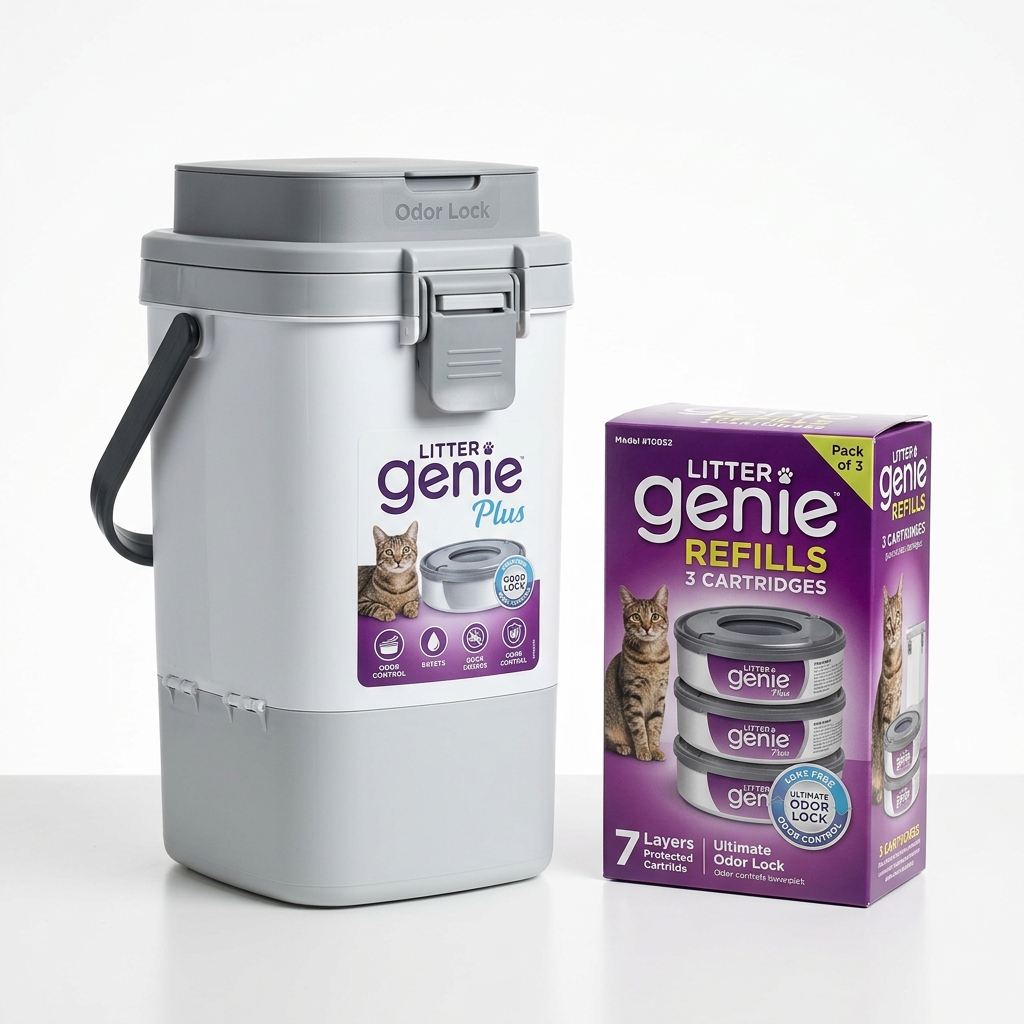
Litter Genie Plus Cat Litter Disposal System
Best for: Odor-free daily litter disposal
- Seals scooped waste away so the bin is not the new odor source
- Compact enough to sit beside the box
- Removes the excuse for leaving clumps in the pan
- Ongoing cost of refill cartridges
As an Amazon Associate, PetMessFix earns from qualifying purchases. You pay the same price — we earn a small commission at no extra cost to you.