Scoop at least twice a day — morning and evening — for every box in the house. Wash the pan itself with unscented soap and warm water every two to four weeks when using clumping litter, and replace the litter entirely at the same time. Non-clumping litter needs a full change every week. Multi-cat homes, kittens and cats with urinary problems need the box scooped more often, not less.
Key takeaways
- Scooping frequency matters far more than which litter you buy. Twice a day is the baseline for clumping litter.
- Scooping and washing are different jobs: scooping removes waste, washing removes the biofilm that builds up on the pan itself.
- With clumping litter, top up as you scoop and do a full change every 2–4 weeks. Non-clumping needs a complete change weekly.
- Never use bleach, ammonia or scented cleaners on a litter pan — plain unscented soap and warm water is correct.
- Replace the plastic pan roughly once a year; scratches hold urine and eventually no cleaning will make it smell fresh.
Most litter box advice collapses three separate jobs into one instruction. Scooping, washing the pan, and replacing the litter entirely are different tasks on different schedules, and confusing them is why so many boxes end up either neglected or over-cleaned.
Here is what each job is, how often it genuinely needs doing, and how to adjust for your particular household.
The Three Jobs, and How Often Each One Needs Doing
| Task | Clumping litter | Non-clumping litter |
|---|---|---|
| Scoop waste | Twice daily | Twice daily (solids), stir urine areas |
| Top up litter | As needed after scooping | Not applicable |
| Full litter change + wash pan | Every 2–4 weeks | Every week |
| Replace the pan itself | Annually | Annually |
That table is the whole answer for a typical single-cat home. The rest of this guide is about when and why to deviate from it.
The one habit that matters most
If you change nothing else, scoop twice a day. It does more for odor control than any premium litter, deodorizer, hood or air freshener — because it removes urine before bacteria have time to convert urea into ammonia.
Scooping: Twice a Day, Every Box
Cats are naturally fastidious about where they eliminate. In the wild they bury waste partly to avoid signalling their presence to predators, and that instinct does not disappear indoors. A box holding a day's worth of clumps is, from your cat's point of view, already unacceptable.
Scoop morning and evening. It takes under a minute per box once it is a habit.
Scoop every box, not just the busy one. Cats often use different boxes for urine and feces.
Lift, do not break. If clumps are crumbling as you scoop, the litter is either too shallow or not clumping hard enough. Both leave saturated fragments behind that keep producing odor. A firmer clumping litter such as Dr. Elsey's Ultra Premium makes a noticeable difference here, and our odor-control litter guide explains why clump integrity matters more than any deodorizing claim.
Deal with the waste properly. Scooping into an open bin next to the box simply moves the smell a metre to the left. A sealing system such as the Litter Genie Plus closes the loop — our Litter Genie review covers whether it earns its refill cost.
Top up after scooping. Scooping removes volume. Add fresh litter to bring the depth back to 7–10 cm, which is what clumps need in order to form fully rather than cementing to the pan floor.
Make it frictionless
Keep the scoop, a supply of fresh litter and the disposal container within arm's reach of the box. Almost every case of "I know I should scoop more often" comes down to the tools being somewhere else.
Full Litter Changes: Every 2–4 Weeks
Even with diligent scooping, the litter that stays behind gradually absorbs residue, dust and fine urine particles. Eventually it stops performing.
With clumping litter: empty the box completely every two to four weeks. Single-cat, well-scooped boxes sit at the four-week end. Multi-cat boxes need it every two weeks or sooner.
With non-clumping litter: change it entirely every week. Urine is not removed by scooping, so it accumulates in the pan from day one.
Signs it is overdue regardless of the calendar:
- You can smell the box from outside the room
- The litter looks grey or dusty rather than its original color
- Clumps are breaking apart when lifted
- Your cat has started perching on the edge, or eliminating just outside the box
- Litter feels damp when you stir it
Our detailed guide on how often to change cat litter covers full-replacement schedules by litter type in more depth, including how the intervals shift across clay, corn, wood and crystal.
Washing the Pan: Every Full Change
A litter pan builds a film of urine salts and bacteria on the plastic, and this biofilm is often the reason a box still smells after the litter has been replaced.
The method:
- Empty the litter completely into a sealed bag.
- Wash with unscented dish soap and warm water. A stiff brush kept for this purpose only is ideal.
- For stubborn residue, soak with warm water and a little enzymatic cleaner before scrubbing.
- Rinse thoroughly — any soap residue will put a cat off.
- Dry completely before refilling. Damp pans cause litter to cement to the base.
What not to use:
- Ammonia-based cleaners. Ammonia is a component of urine. To a cat, you have just made the box smell like it needs marking.
- Bleach. Damages plastic over time, and mixing it with residual urine ammonia produces chloramine gas.
- Scented cleaners of any kind. Strong fragrance is one of the more common reasons cats stop using a box. See why cats refuse to use the litter box.
Never mix cleaners
Do not use bleach on a pan that still holds urine residue, and never combine bleach with ammonia products. The reaction releases toxic gas in what is usually a small, poorly ventilated room.
Replacing the Pan Itself: About Once a Year
Plastic develops fine scratches from scooping and from claws. Those scratches hold urine, and past a certain point no amount of washing will make the pan smell clean.
Replace it annually, or sooner if the plastic is visibly scored or the box still smells immediately after a full wash and fresh litter. Stainless steel pans avoid this entirely and last indefinitely, at a higher upfront cost.
If your box smells despite a fresh clean, our guide on why a litter box smells even after cleaning works through the less obvious causes — including the floor and wall around the box, which often need treating too.
Adjusting for Your Household
Multiple cats
Scoop three times a day where you can, and do full changes every two weeks rather than four. Keep one box per cat plus one spare, in separate locations rather than side by side — a row of boxes in one room counts as one location to a cat guarding it. Our multi-cat litter guide covers placement and competition in detail.
Kittens
Kittens use the box more often relative to their size and are still learning. Scoop after each use where practical, and use a non-clumping litter until around four months, since kittens sometimes ingest litter while learning to bury. Our kitten litter training guide covers the transition.
Senior cats and cats with arthritis
Older cats often cannot climb into a high-sided box comfortably, and a soiled box gives them an additional reason to go elsewhere. Use a low-entry box, keep it scrupulously clean, and put one on every floor of the house so they are never far from an option.
Cats with urinary problems
If your cat has had a UTI, crystals or feline lower urinary tract disease, scoop after every use where you can. It lets you monitor output directly — how many clumps, what size, and whether there is any blood — which is genuinely useful information for your vet. Our guide on blood in cat litter covers what warrants a same-day call.
Automatic litter boxes
Self-cleaning boxes rake waste into a sealed compartment after each use, which removes the scooping job but not the rest of it. You still need to empty the waste drawer every few days and do a full wash on the same schedule as a manual box. Our self-cleaning litter box guide covers what they do and do not solve.
Why Under-Cleaning Backfires
A dirty box is one of the most common reasons a cat starts going elsewhere — and once that habit forms it is considerably harder to undo than it was to prevent. You then have two problems: the behavior, and removing cat urine smell from the house, which is a genuinely difficult job.
There are health consequences too. Cats that avoid a soiled box sometimes hold urine longer than they should, which is a risk factor for urinary tract problems. And a box that is never fully changed becomes a reservoir for bacteria and, in rare cases, parasites.
If your cat has already started going outside the box, our guide on why cats suddenly pee outside the litter box works through the medical and behavioral causes in the right order — medical first.
Over-Cleaning Is Also a Thing
It is possible to go too far in the other direction:
- Scented cleaners and heavily perfumed litter can make the box aversive.
- Changing litter brands frequently unsettles cats who have a texture preference. Transition gradually over 7–10 days.
- Washing the pan every single day with strong detergent leaves residual smell that some cats dislike.
The target is a box that smells of nothing at all — not of cleaning products.
A Simple Weekly Routine
Every morning: scoop every box, top up litter, empty the disposal container if needed.
Every evening: scoop every box.
Once a week: sweep or vacuum around the boxes, wash the mats, check litter depth, and look at the pan for scratching.
Every 2–4 weeks: full litter change, wash and dry the pan, refill to 7–10 cm.
Every 12 months: replace the pan.
The Bottom Line
Scoop twice a day, wash the pan and replace the litter every two to four weeks with clumping litter or weekly with non-clumping, and swap the pan itself once a year. Adjust upward for multiple cats, kittens, seniors and any cat with urinary problems.
The frequency is not really about cleanliness for its own sake. A consistently clean box is the single most effective thing you can do to keep a cat using it — and keeping a cat using the box is far easier than persuading one to come back to it.
Frequently asked questions
How often should you scoop a litter box?
At least twice a day — once in the morning and once in the evening — for each box in the home. Cats are fastidious and many will start avoiding a box that holds more than a day's waste. Twice-daily scooping also removes urine before bacteria convert urea into ammonia, which is the main source of litter box smell.
How often should you completely change the litter?
With clumping litter, do a full change every two to four weeks, topping up between times as scooping removes volume. With non-clumping litter, change it completely once a week, since urine stays in the pan rather than being removed. Multi-cat boxes need the shorter end of both ranges.
What should I use to wash a litter box?
Unscented dish soap and warm water. Rinse thoroughly and dry completely before refilling. Avoid bleach, ammonia and any scented cleaner — ammonia smells like urine to a cat and can encourage marking, while strong fragrance is a common reason cats reject a box.
Is it bad to scoop the litter box while pregnant?
Cat feces can carry Toxoplasma gondii, which poses a risk during pregnancy. The standard advice is for someone else to handle scooping. If that is not possible, wear disposable gloves and a mask, scoop daily (the parasite takes one to five days to become infectious, so prompt removal reduces risk substantially), and wash hands thoroughly afterwards. Discuss it with your doctor.
How many litter boxes should I have?
One per cat plus one spare. Two cats need three boxes, placed in different locations rather than lined up in a row. This reduces competition and gives a cat somewhere else to go if one box is soiled or being guarded by another cat.
Products recommended in this guide
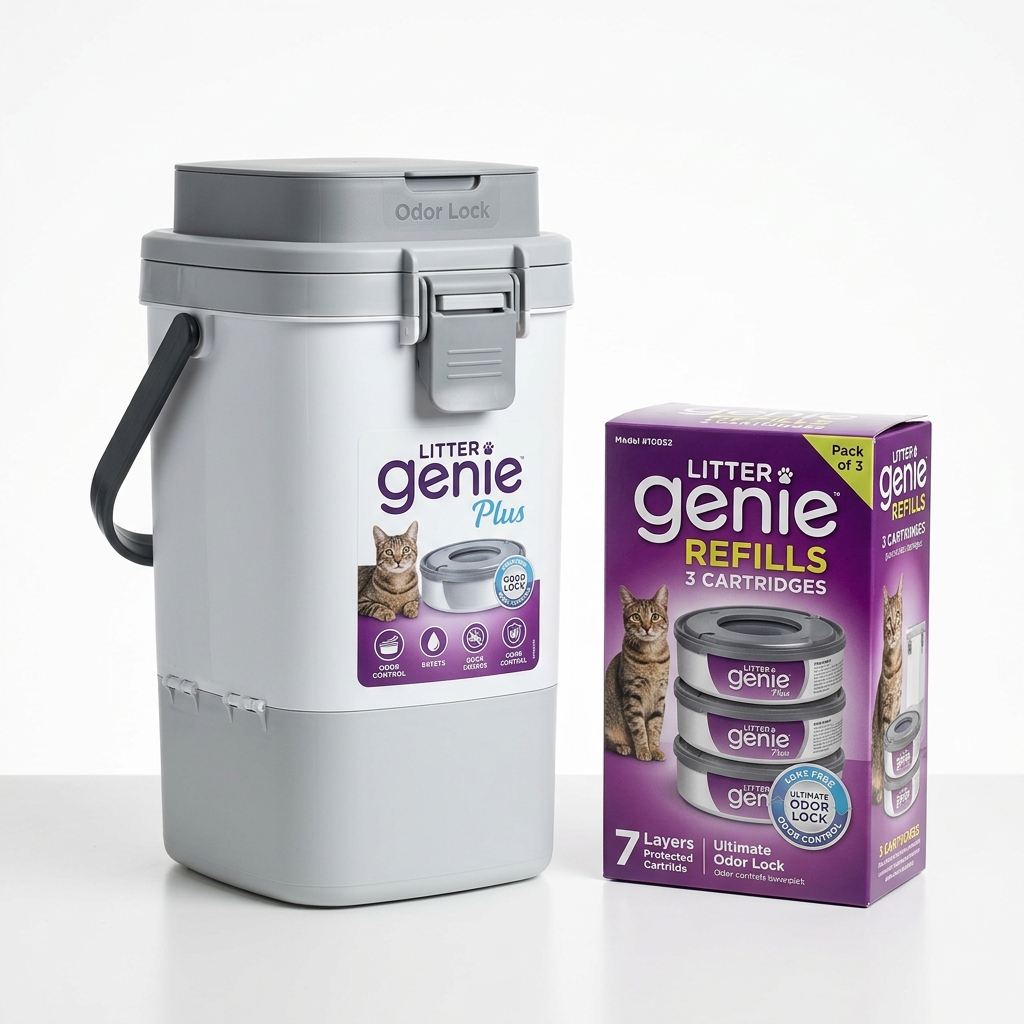
Litter Genie Plus Cat Litter Disposal System
Best for: Odor-free daily litter disposal
- Seals scooped clumps away so the bin does not become the odor source
- Sits next to the box, which makes twice-daily scooping realistic
- Holds several days of waste before needing emptying
- Ongoing refill cartridge cost
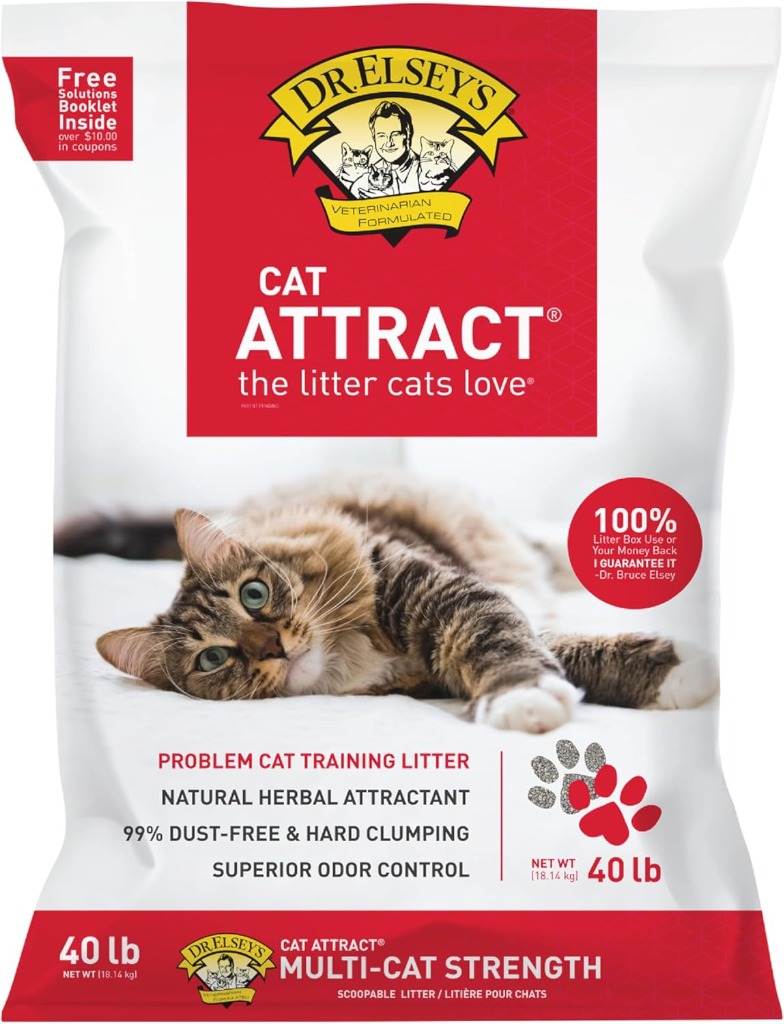
Dr. Elsey's Ultra Premium Clumping Cat Litter
Best for: Superior clumping performance for adult cats
- Clumps hold together when lifted, so less waste is left behind
- Unscented and fine-grained
- Low dust for a clay litter
- Heavy bags
As an Amazon Associate, PetMessFix earns from qualifying purchases. You pay the same price — we earn a small commission at no extra cost to you.