Litter box maintenance is one of those chores where doing it wrong costs you — in persistent odor, in your cat's cooperation, and sometimes in your cat's health. Most cat owners scoop regularly but change the litter far less often than they should, and fewer still properly clean the box itself.
This guide lays out a clear, practical schedule based on litter type, number of cats, and health factors — so you can stop guessing.
The Two Levels of Litter Box Maintenance
There's an important distinction between scooping and changing:
Scooping means removing clumps or solid waste from the litter without replacing the entire contents. This should happen daily at minimum, twice daily for multi-cat households.
Changing means removing all the litter, washing the box, and starting fresh. This needs to happen on a regular schedule regardless of how faithfully you scoop.
Both are necessary. Skipping either creates problems.
How Often to Scoop
Scoop at least once every 24 hours, without exception. Cats have a sense of smell 14 times stronger than ours. What smells faintly unpleasant to you is genuinely overwhelming to your cat. Most litter box avoidance problems trace back to a box that isn't being scooped often enough.
For households with two or more cats, aim for twice daily scooping. For cats with urinary conditions or who are especially particular, scoop after each use if possible.
Complete Litter Change Schedule by Litter Type
Clumping Litter
With daily scooping, clumping litter can last 2–4 weeks before a full change is necessary for a single-cat household. The benefit of clumping is that urine is contained in discrete clumps you can remove, preventing it from saturating the remaining litter. Over time, though, the fine clay particles absorb odors even when clumps are removed, and the litter bed becomes less effective.
Recommended schedule: Full change every 2–3 weeks (1 cat), every 1–2 weeks (2+ cats).
Non-Clumping Litter
Non-clumping litter absorbs urine but doesn't bind it into removable clumps. This means urine accumulates at the bottom of the box no matter how often you scoop solids. The litter saturates quickly and cannot be salvaged by scooping alone.
Recommended schedule: Full change every 1–2 weeks regardless of number of cats.
Crystal / Silica Gel Litter
Silica gel crystals absorb moisture and trap odor molecules through adsorption. A single cat's box can go 3–4 weeks between changes, though you should stir the crystals daily and scoop solids promptly. When the crystals turn yellow and stop absorbing — or when you notice odor returning — it's time for a full change.
Recommended schedule: Full change every 3–4 weeks (1 cat), every 2–3 weeks (2+ cats).
Natural / Biodegradable Litter (Corn, Wood, Paper, Tofu)
These vary significantly. Paper litter saturates quickly and needs changing every 1–2 weeks. Corn and tofu litters with clumping properties behave similarly to clay clumping litter. Wood pellet litters dissolve into sawdust when wet — once most pellets have dissolved, it's time for a change.
Recommended schedule: Every 1–3 weeks depending on material and clumping ability.
The Complete Litter Box Change: Step by Step
Dumping old litter and pouring in new is only half the job. The plastic box itself harbors bacteria and absorbs urine odor over time.
- Dump all litter into a sealed bag or a disposal system like the Litter Genie Plus, which traps odors between trips to the trash and holds up to two weeks of waste — making daily disposal far more manageable.
- Rinse the box with hot water to remove debris.
- Wash with mild dish soap — avoid bleach (too harsh for cats) and ammonia (smells like urine to cats). A diluted white vinegar rinse neutralizes odor naturally.
- Rinse thoroughly and allow to dry completely before refilling. Wet litter clumps prematurely and molds faster.
- Add fresh litter to a depth of 3–4 inches. Less and cats can't dig properly; more and litter ends up tracked around the room.
How Often to Replace the Box Itself
Plastic litter boxes should be replaced every 1–2 years, or when you notice scratches that trap odor and bacteria. No matter how well you clean a heavily scratched box, bacteria colonize those micro-grooves and contribute to persistent odor. See our guide to why litter boxes smell even after cleaning for more on this.
Factors That Change Your Schedule
More cats = more frequent changes. A two-cat household should follow the higher end of frequency for every litter type. For households with three or more cats, consider managed systems and more frequent full changes.
Health conditions. Cats with kidney disease, diabetes, or hyperthyroidism urinate more frequently and in larger volumes. Their boxes need more frequent scooping and more frequent full changes.
Age. Senior cats and kittens may have less precise aim or more frequent elimination. Check the box more often and clean more frequently.
Covered boxes. Enclosed boxes trap moisture and odor. If you use a covered box, plan to change more frequently than the standard schedule — or switch to uncovered. For a full comparison, see covered vs. uncovered litter box.
The Bottom Line
The right litter change schedule depends on your litter type, the number of cats in your household, and any health factors. For most single-cat households using clumping litter and scooping daily, a complete change every two to three weeks — with a proper box wash — keeps the box fresh and your cat happy. When in doubt, change sooner. The cost of a little extra litter is far less than the cost of a cat that starts avoiding the box.
For multi-cat households specifically, see our detailed guide on litter strategies for multiple cats for box count, placement, and maintenance tips that scale.
Frequently asked questions
How often should you completely change cat litter?
With clumping litter and daily scooping, a complete change every 2–4 weeks is typical for one cat. Non-clumping litter needs a full change every 1–2 weeks since waste can't be removed as precisely. Crystal litter generally lasts 3–4 weeks per cat. These are guidelines — if you notice odor before the scheduled change, change it sooner.
Is it OK to just scoop and not change the litter?
Scooping daily is essential, but it's not a substitute for a complete change. Even with perfect daily scooping, fine litter particles absorb urine odors and bacterial byproducts over time. The litter becomes less effective at controlling odor, and most cats will reduce their box usage. A full change — including washing the box — is necessary regularly.
How do I know when to change the litter?
The clearest signs are persistent odor even after scooping, litter that feels damp or clumps poorly, and your cat hesitating at or refusing the box. Trust your nose — if you can smell it from across the room, your cat definitely can. They're far more sensitive to smell than you are.
Products recommended in this guide
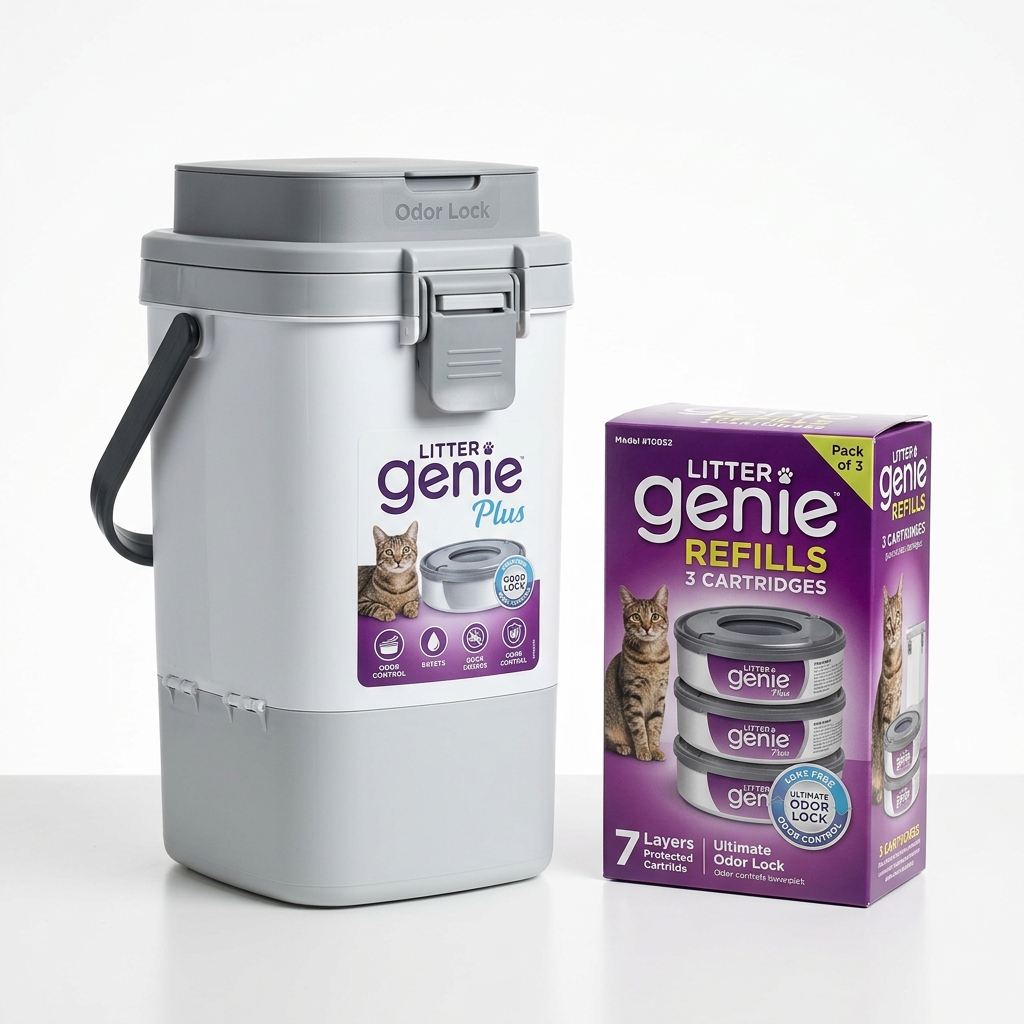
Litter Genie Plus Cat Litter Disposal System
Best for: Odor-free daily litter disposal
- Traps odor between trips to the trash
- Holds up to 2 weeks of waste for one cat
- Compact and easy to use
- Proprietary refill bags add ongoing cost
As an Amazon Associate, PetMessFix earns from qualifying purchases. You pay the same price — we earn a small commission at no extra cost to you.