Walk into any pet store and the cat litter aisle presents an overwhelming number of choices. But beneath all the brand names and marketing claims, every litter falls into one of two fundamental categories: clumping or non-clumping. Understanding the difference — and knowing which is right for your cat's specific situation — simplifies every litter decision you'll ever make.
How Clumping Litter Works
Clumping litters are typically made from sodium bentonite clay, a naturally occurring mineral that absorbs liquid and binds it into a firm, scoopable mass. When your cat urinates, the surrounding clay particles absorb the moisture and lock together. The result is a distinct clump that can be lifted out of the box intact, leaving the remaining clean litter undisturbed.
This mechanism has two major advantages: precision waste removal and significantly better odor control. Because urine is contained and removed rather than distributed throughout the litter, ammonia buildup is dramatically slower.
How Non-Clumping Litter Works
Non-clumping litters — including traditional clay, paper, wood pellets, and some crystal formulas — absorb moisture but don't bind together. Urine is dispersed and held within the litter granules or pellets. Solid waste can be scooped, but urine cannot be selectively removed. This means the entire litter bed must be changed at regular intervals.
Head-to-Head Comparison
Odor Control
Clumping wins. Because urine is contained and removed daily, ammonia doesn't accumulate as quickly. With non-clumping, urine saturates the lower litter layers over days, generating increasing odor that only a full change resolves. The science of cat odor explains exactly why ammonia accumulates and what controls it.
Ease of Maintenance
Clumping wins. Daily scooping removes both urine and fecal matter precisely. Non-clumping requires scooping solids but a complete change of all litter every 1–2 weeks.
Cost Over Time
Clumping is generally more economical. Although clumping litter often costs more per bag, you use less of it over time because you're only replacing what you scoop out. Non-clumping requires full disposal and replacement far more frequently.
Dust Levels
Non-clumping tends to win, with exceptions. Traditional clay clumping litters can be dusty, though premium options like Dr. Elsey's Ultra are rated 99.9% dust-free. For cats with asthma or upper respiratory conditions, low-dust clumping clay or paper-based non-clumping are the best choices.
Tracking
Roughly equivalent, depends on formulation. Fine clay clumping litters track more than large pellet non-clumping options like wood pellets. However, lightweight clumping litters track about the same as fine non-clumping clay. See our stop litter tracking guide for solutions regardless of litter type.
Weight and Convenience
Non-clumping wins. Lightweight and natural non-clumping litters are significantly easier to carry and manage than heavy clay clumping bags, which can weigh 20–40 lbs.
Safety for Kittens
Non-clumping wins clearly. As described in our kitten litter training guide, clumping clay poses a risk of intestinal blockage if ingested by very young kittens. Non-clumping paper or wood litters are the recommended choice for kittens under 3 months.
Which Is Better for Your Specific Situation?
| Situation | Best Choice |
|---|---|
| Single adult cat, easy maintenance | Clumping clay |
| Multiple cats | Premium clumping clay (better odor at scale) |
| Kitten under 3 months | Non-clumping paper or wood |
| Cat with respiratory issues | Low-dust clumping or paper non-clumping |
| Eco-conscious household | Natural clumping (corn, tofu) or wood pellets |
| Budget priority | Clumping clay (more economical long-term) |
| Senior cat with mobility issues | Lightweight clumping or low-dust clay |
The Third Option: Crystal / Silica Gel Litter
Crystal litters occupy a middle ground. They're technically non-clumping (urine is absorbed, not bound) but provide excellent odor control through adsorption — trapping odor molecules on the surface of silica granules. They last longer than standard non-clumping clay (up to 4 weeks per cat), require only solid waste scooping, and produce almost no dust. The main downsides are cost and the hard texture that some cats dislike.
What Most Vets Recommend
For healthy adult cats, most veterinary professionals recommend a clumping litter because it allows daily monitoring of urine output and appearance — changes in clump size, frequency, or color can be early indicators of health issues. A multi-cat household benefits especially from clumping, as managing odor across multiple boxes becomes much more feasible.
The Bottom Line
Clumping litter is the better all-around choice for most adult cats. It's easier to maintain, better for odor control, and more economical over time. Non-clumping earns its place with kittens, cats with respiratory sensitivities, and owners who prefer natural materials. The best litter, ultimately, is the one your cat will use consistently. Start with a high-quality clumping option and adjust based on your cat's response.
Frequently asked questions
Is clumping or non-clumping litter better for odor control?
Clumping litter generally provides better odor control because it contains urine in discrete clumps that can be removed daily, preventing buildup. Non-clumping litter absorbs urine but it remains in the box and accumulates over time. For most adult cats, clumping litter is the better choice for odor management.
Can I use clumping litter for kittens?
Veterinarians generally recommend waiting until kittens are at least 8–12 weeks old — and ideally 3 months — before introducing clumping clay litter. Young kittens explore with their mouths, and ingested clumping clay can expand in the digestive tract. Use paper-based or other non-clumping options for very young kittens.
Which type of cat litter is healthier for cats?
Both types are safe when used appropriately. Non-clumping litters (especially paper and wood-based) tend to have less silica dust, which is a consideration for cats with respiratory sensitivities. For adult cats without health concerns, high-quality low-dust clumping clay or natural clumping litters are healthy choices. Avoid heavily scented litters of either type.
Products recommended in this guide
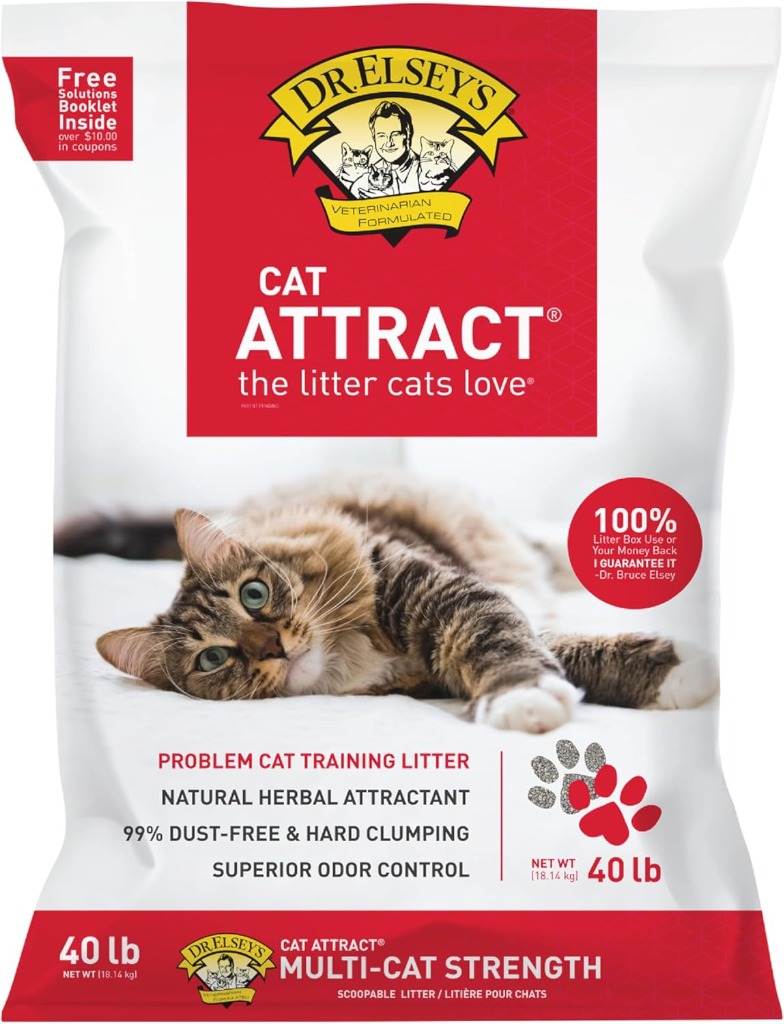
Dr. Elsey's Ultra Premium Clumping Cat Litter
Best for: Superior clumping performance for adult cats
- Tight, scoopable clumps that don't crumble
- Extremely low dust — 99.9% dust free
- Excellent odor control without added fragrance
- Heavier than lightweight alternatives
- Not suitable for kittens under 3 months
As an Amazon Associate, PetMessFix earns from qualifying purchases. You pay the same price — we earn a small commission at no extra cost to you.