Cat litter smell in carpet is a uniquely persistent problem. Unlike most household odors that fade with time and air, feline litter odor — driven by uric acid chemistry — can remain active in carpet fibers for months or even years without proper treatment. Conventional cleaning methods not only fail to fix it; some actually make it worse.
This guide gives you the step-by-step process that actually works, explains why other methods fail, and covers how to prevent the problem from returning.
Why Cat Litter Smell Is So Stubborn in Carpet
The primary culprit is uric acid, a component of cat urine that forms crystals as it dries. These crystals are insoluble in water, which means mopping, steam cleaning, or using standard carpet cleaners doesn't remove them — it just redistributes them deeper into the carpet fibers. When the area dries, the crystals reactivate with humidity and release ammonia gas and mercaptans (sulfur compounds), which is what your nose detects.
Additionally, cat litter itself tracks fine particles of clay or other minerals into carpet fibers. These particles absorb and hold cat waste residue at a microscopic level that vacuuming alone can't address.
The science behind cat odor explains the full chemistry of feline odor compounds if you want to understand exactly what you're dealing with.
What You'll Need
- Stiff-bristle brush or carpet rake
- Vacuum cleaner (preferably with HEPA filter)
- Enzyme cleaner (Rocco & Roxie Professional Strength is consistently one of the top performers — enzyme-activated, certified safe for pets and children, and effective on both fresh and set-in odors)
- Baking soda (optional, for surface treatment between steps)
- Clean white cloths or paper towels
- Fan (to aid drying)
Step-by-Step Process
Step 1: Remove Visible Litter Granules
Use a stiff brush to dislodge litter particles from carpet fibers, working in multiple directions. Then vacuum thoroughly, using the crevice attachment to work along baseboards and into corners. Make two or three passes — you want to remove as much physical litter material as possible before adding any moisture.
Do not skip this step. Wetting the carpet before removing granules can cause clay particles to bond more firmly to fibers.
Step 2: Apply Enzyme Cleaner Generously
This is the critical step. Saturate the affected area with enzyme cleaner. "Saturate" means genuinely soaking the fibers — not a light spray. The enzyme cleaner needs to reach as deep as the odor does, and if the smell has been present for a while, it's reached the carpet backing and potentially the subfloor padding.
Let the cleaner dwell for at least 10–15 minutes (follow the specific product's instructions; some require up to 30 minutes for best results). The bacterial enzymes in the cleaner need contact time to break down uric acid crystals — rushing this step is the most common reason enzyme treatments fail.
Step 3: Blot, Don't Rub
After the dwell time, blot the area with clean white cloths to absorb the loosened residue. Work from the outside of the affected area toward the center to prevent spreading. Never rub — rubbing pushes the loosened material deeper into the fibers and spreads it further.
Repeat the enzyme application and blotting process a second time on severely affected areas.
Step 4: Allow to Dry Completely — With Airflow
This is where most people rush the process and undermine their results. The enzyme treatment needs to dry fully and naturally to complete the biochemical breakdown process. Place a fan aimed at the treated area and allow 4–6 hours of drying time minimum, longer in humid conditions.
Do not walk on the area, cover it, or use heat to speed drying. Heat deactivates the enzyme bacteria before they've finished working.
Step 5: Baking Soda Treatment (Optional)
Once the enzyme treatment is completely dry, you can apply a thin, even layer of baking soda as a final deodorizing step. Leave it for several hours or overnight, then vacuum thoroughly. Baking soda won't break down uric acid, but it absorbs surface-level ammonia odors during the transition period.
Step 6: Assess and Repeat if Necessary
After complete drying, smell the area. A cat-free person's nose is actually most useful here, since those who live with cats adapt to the baseline odor level. If any odor remains, repeat the enzyme treatment. Deeply embedded, long-standing odors may require two to three full treatment cycles.
What NOT to Do
- Do not use steam cleaners before enzyme treatment — heat bonds uric acid crystals to fibers
- Do not use bleach — toxic to cats, doesn't break down uric acid, and can discolor carpet
- Do not use ammonia-based cleaners — ammonia is present in cat urine and will attract your cat back to the spot
- Do not rub the area — always blot
Preventing Litter Smell From Getting Into Carpet
A litter mat placed under and extending in front of the box catches tracked particles before they embed in carpet. Our guide to stopping litter tracking covers the best mat configurations for different box setups.
Keeping litter box odor controlled at the source also reduces the volume of ammonia compounds that become airborne and settle into nearby carpets. See our guide to why litter boxes smell even after cleaning and our complete breakdown of enzyme cleaners for cat urine.
The Bottom Line
Getting cat litter smell out of carpet requires an enzyme cleaner, adequate application volume, proper dwell time, and complete drying. Skip any of these steps and the odor will return. Do them correctly and most carpet odor problems are fully resolved within one to two treatment cycles. The most important thing: never apply heat or steam to cat-odor-affected carpet before completing enzyme treatment.
Frequently asked questions
Why does cat litter smell linger in carpet even after cleaning?
Standard carpet cleaners and steam cleaning don't break down uric acid crystals, which are the primary source of persistent cat odor. When the carpet dries after a conventional cleaning, the crystals reactivate and the smell returns — often stronger than before. Only enzymatic cleaners actually digest and neutralize uric acid at the molecular level.
Does baking soda actually remove cat litter smell from carpet?
Baking soda can absorb and temporarily reduce some odors on the carpet surface, but it has no ability to break down the uric acid compounds that cause persistent cat smell. It's a useful short-term measure between treatments, but it's not a long-term solution and should be vacuumed out thoroughly before applying enzyme cleaners.
Can steam cleaning remove cat smell from carpet?
Steam cleaning alone can actually make cat odor worse. The heat from steam causes uric acid crystals to bond more deeply to carpet fibers, setting the odor permanently. If steam cleaning is used, it should only be applied after the area has been fully treated and neutralized with an enzyme cleaner.
Products recommended in this guide
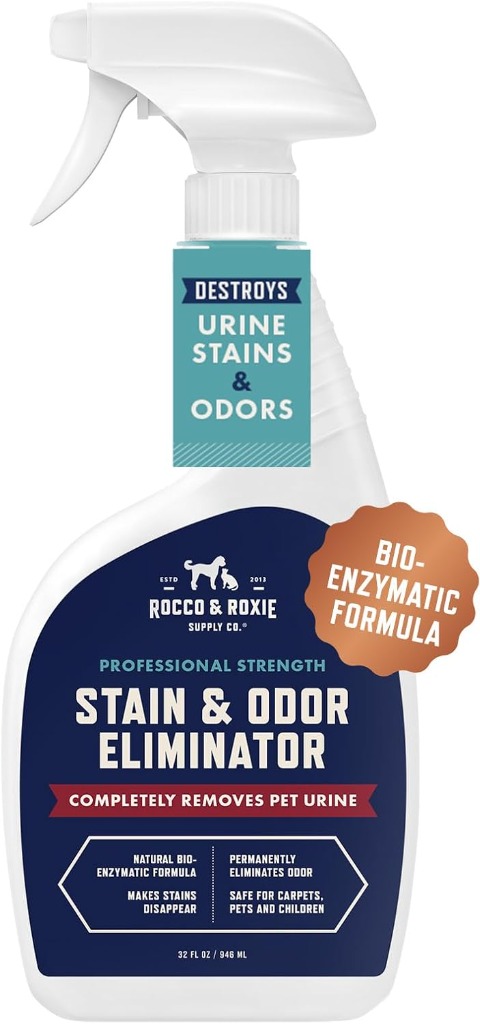
Rocco & Roxie Professional Strength Stain & Odor Eliminator
Best for: Deep enzyme cleaning of cat odors embedded in carpet
- Certified gentle and safe for pets and children
- Enzyme-powered — eliminates odor at molecular level
- Works on both fresh and set-in stains and odors
- Requires adequate dwell time for full effectiveness
As an Amazon Associate, PetMessFix earns from qualifying purchases. You pay the same price — we earn a small commission at no extra cost to you.