Introduction: The Invisible Invader
Every cat owner knows the moment. You walk through the front door after a long day, drop your keys, and before you even see your feline friend, your nose detects it: the unmistakable, sharp, and lingering scent of the litter box. Cat odor is the ultimate invisible invader, capable of permeating a room and making even the most immaculate home feel unclean. But why does cat waste smell so uniquely pungent? Why does it seem to defy ordinary household cleaners, returning again and again like a phantom scent? The answers lie not in poor housekeeping, but in the fascinating, complex, and highly specialized biochemistry of the domestic cat.
In this comprehensive guide, we will dive deep into the science of cat odor. We will explore the unique chemical compounds that make cat urine so notoriously difficult to neutralize, the evolutionary reasons behind these compounds, and the bacterial processes that turn a fresh litter box into a biological hazard zone. Armed with this scientific understanding, you will be better equipped to tackle the problem at its root, using the right tools—like bio-enzymatic cleaners and specialized disposal systems—to permanently reclaim the fresh air in your home.
🧪 Our Top Pick: Rocco & Roxie Odor Eliminator Spray
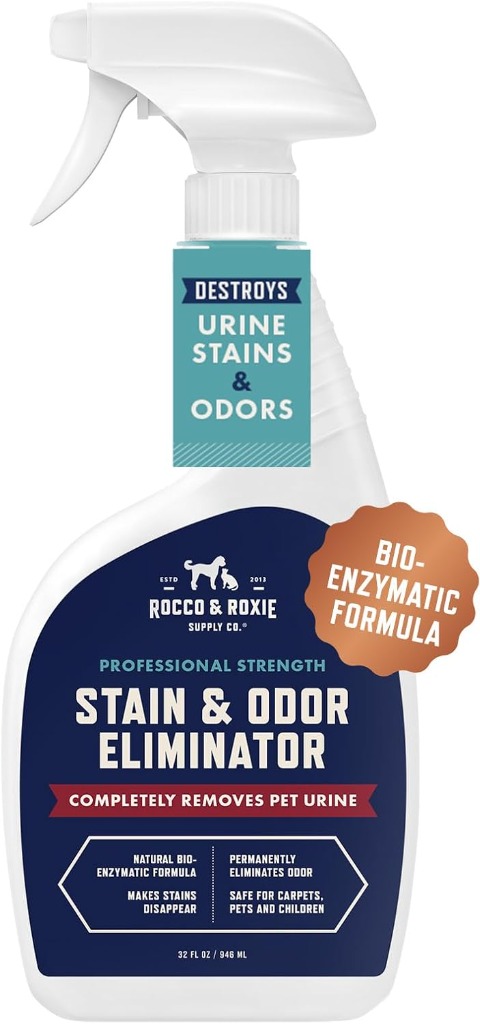
Professional strength bio-enzymatic formula destroys ammonia and mercaptans on contact.
Buy on Amazon →🔗 Affiliate link — you pay the same Amazon price, we earn a small commission at no cost to you.
The Unique Biochemistry of Cat Urine
To understand why cat urine smells the way it does, we must first look at its chemical composition. Urine from any mammal is primarily composed of water, urea, creatinine, uric acid, and various detoxified substances and electrolytes. However, feline urine contains several specific elements that set it apart from the waste of humans, dogs, or other pets.
Felinine: The Signature Scent
The true culprit behind the distinctively "catty" smell of feline urine is a unique sulfur-containing amino acid called felinine. Discovered in 1953, felinine is found almost exclusively in the urine of domestic cats and a few of their close wild relatives. It is produced in the liver, regulated by testosterone, and excreted through the kidneys, which is why intact male cats (tomcats) have the strongest-smelling urine.
Interestingly, felinine itself is entirely odorless when it is first excreted. However, as it sits in the litter box and begins to degrade, it breaks down into a volatile sulfur compound known as 3-mercapto-3-methylbutan-1-ol (MMB). If the word "mercapto" sounds familiar, it is because mercaptans are the same class of compounds that give skunk spray its notoriously offensive odor. This degradation process is what produces that unmistakable, territorial scent.
Urea and the Ammonia Assault
Like all mammals, cats excrete urea, a nitrogen-rich byproduct of protein metabolism. Cat urine is highly concentrated, meaning the ratio of urea to water is unusually high. When a cat urinates in the litter box, bacteria from the environment immediately go to work. These bacteria produce an enzyme called urease, which catalyzes the breakdown of urea into ammonia and carbon dioxide.
Ammonia (NH3) is a highly volatile and alkaline gas. It is responsible for the sharp, eye-watering, and suffocating stench that hits you when a litter box has been neglected. Because ammonia is lighter than air, it rapidly diffuses throughout the room, easily reaching human noses and embedding itself in fabrics, curtains, and upholstery.
Uric Acid: The Lingering Ghost
Perhaps the most frustrating component of cat urine is uric acid. Unlike urea, which breaks down into ammonia and eventually evaporates, uric acid crystallizes as the urine dries. These uric acid crystals are highly stable, non-water-soluble, and can bind tightly to virtually any porous surface, including carpets, clothing, unsealed wood floors, and concrete.
These crystals are the reason why an old urine stain can suddenly start smelling again on a humid day. Moisture in the air reactivates the dormant uric acid crystals, releasing trapped odor molecules back into the environment. Because these crystals are insoluble in water, traditional household cleaners—like soap, vinegar, and baking soda—are entirely ineffective at removing them. They may wash away the water-soluble components of the urine, but the uric acid crystals remain indefinitely, waiting to strike again.
The Evolutionary Origins of Concentrated Odor
Why did nature design a creature with such foul-smelling waste? The answer lies in the evolutionary history of the domestic cat (Felis catus). Domestic cats are descendants of the African wildcat (Felis lybica), a species native to arid, desert environments in the Middle East and North Africa.
In the desert, water is a precious and scarce resource. To survive in these harsh conditions, the feline body evolved an incredibly efficient renal (kidney) system designed to conserve as much water as possible. A cat's kidneys are capable of extracting and reabsorbing a massive amount of water from their waste before it is excreted in the bladder. As a result, cat urine is highly concentrated—much more so than human or dog urine.
This evolutionary adaptation is brilliant for survival, but terrible for your living room. The extreme concentration of waste products like urea, uric acid, and felinine means that volume-for-volume, cat urine packs a much stronger odorous punch than the urine of other animals. Furthermore, as obligate carnivores, cats consume a diet almost entirely composed of protein. The metabolism of this high-protein diet generates significant amounts of nitrogen and sulfur, which are eventually excreted in the urine and feces, further amplifying the biological smell.
The Chemistry of Feline Feces
While urine often gets the blame for the worst litter box smells, cat feces can be equally offensive. Once again, this comes down to the cat's biological status as an obligate carnivore. A healthy feline diet requires high levels of animal protein and fat, and lacks the large amounts of carbohydrates and fiber consumed by omnivores.
When dietary proteins are broken down in the feline digestive tract, the process produces several highly pungent chemical compounds:
- Indole and Skatole: These are nitrogenous organic compounds formed from the breakdown of the amino acid tryptophan in the mammalian gut. Skatole, in particular, is responsible for the characteristic smell of feces across many species, but the high protein intake of cats makes their waste particularly rich in these compounds.
- Hydrogen Sulfide: Produced by sulfate-reducing bacteria in the gut, hydrogen sulfide is the gas responsible for the smell of rotten eggs.
- Mercaptans: The same class of sulfur compounds found in degrading urine can also be produced during the digestion of sulfur-rich animal proteins.
The Influence of Diet and Hydration on Odor
The Role of Protein Quality
Cats are exquisitely adapted to metabolize animal protein. However, not all proteins are created equal. High-quality animal proteins, such as fresh chicken, turkey, or fish, are highly digestible. A healthy cat will break down and absorb the vast majority of these nutrients, leaving relatively little waste to be fermented by bacteria in the lower intestine.
Conversely, many lower-tier commercial cat foods rely heavily on plant-based proteins, such as corn gluten meal, soy, or wheat, to inflate the protein percentage on the nutritional label. While these ingredients meet the technical requirement for protein, a cat's gastrointestinal tract lacks the necessary enzymes to process plant matter efficiently. As a result, a significant amount of undigested plant protein passes into the colon. Here, it undergoes anaerobic fermentation by gut flora, producing an excess of foul-smelling gases like hydrogen sulfide, methane, and various short-chain fatty acids.
If you notice that your cat's feces are exceptionally malodorous, examining their diet is the first scientifically logical step. Transitioning to a high-protein, low-carbohydrate wet food or a premium dry food with animal meat as the primary ingredient can drastically alter the microbiome of your cat's gut, thereby reducing the volatility of the resulting waste.
Hydration and Urine Concentration
The concentration of a cat's urine is directly inversely proportional to their water intake. Cats natively have a very low thirst drive. In the wild, felines obtain approximately 70% to 80% of their necessary hydration directly from the bodies of their prey. When domestic cats are fed an exclusive diet of dry kibble—which typically contains only 10% moisture—they exist in a state of chronic, mild dehydration.
To compensate for this lack of water intake, their already highly efficient kidneys go into overdrive, extracting every possible drop of water back into the bloodstream. This results in highly concentrated, deeply yellow urine with an extraordinarily high specific gravity. This concentrated urine is packed tightly with urea, uric acid, and felinine. Increasing a cat's water intake by switching to wet food, utilizing a flowing pet water fountain, or adding broths to their meals can dilute the urine. Dilution is one of the most effective, biologically grounded strategies for reducing the pungency of the litter box.
🧪 Our Top Pick: Rocco & Roxie Odor Eliminator Spray
Professional strength bio-enzymatic formula destroys ammonia and mercaptans on contact.
Buy on Amazon →🔗 Affiliate link — you pay the same Amazon price, we earn a small commission at no cost to you.
The Microbiome of the Litter Box
Think of the litter box not just as a plastic tray, but as a thriving, dynamic ecosystem. The moment a cat deposits waste, they are seeding that environment with organic matter (food) and moisture. The ambient environment provides the bacteria.
The primary colonizers of the litter box are aerobic bacteria, which require oxygen to survive. These bacteria immediately begin synthesizing urease, the enzyme that breaks down urea. As the bacterial population explodes, they consume the available resources. In an un-scooped box, the waste is buried, cutting off oxygen to the lower layers. This shifts the ecosystem from an aerobic environment to an anaerobic one.
Anaerobic bacteria—those that thrive without oxygen—are responsible for the most offensive odors in nature. They are the organisms that cause things to rot and decay. In the oxygen-deprived depths of an uncleaned litter box, anaerobic bacteria break down organic matter and release highly toxic and intensely foul-smelling byproducts, including putrescine and cadaverine. These diamines are the precise compounds responsible for the smell of decomposing flesh. When a litter box reaches this stage, the odor is no longer just "cat pee"—it is the smell of active biological decay. This microbial succession is why a box that has been ignored for three days smells exponentially worse than a box that has been ignored for one day.
Environmental Factors That Exacerbate Odor
Temperature and Humidity
Heat acts as a catalyst for chemical reactions and bacterial growth. Placing a litter box in a warm location—such as near a furnace, in a sunroom, or adjacent to a washing machine—will accelerate the breakdown of urea into ammonia and the conversion of felinine into MMB. Additionally, heat increases the volatility of odor molecules, allowing them to become airborne and spread more rapidly.
Humidity plays a similarly destructive role. High moisture levels in the air provide the water necessary for bacteria to thrive and multiply. Humidity also reactivates dried uric acid crystals, which is why a previously cleaned carpet spot might suddenly reek of cat urine during a rainy week in the summer.
The Danger of Ammonia Exposure
Allowing cat odor to persist in your home is not merely an aesthetic or olfactory nuisance; it can actually pose a health risk to both you and your pets. The ammonia generated by degrading cat urine is a toxic gas.
In humans, prolonged exposure to high levels of ammonia can cause respiratory irritation, triggering asthma attacks, coughing, and shortness of breath. It can also cause irritation to the eyes, nose, and throat. For individuals with compromised immune systems or pre-existing respiratory conditions, the presence of ammonia can severely degrade their quality of life.
Crucially, cats themselves are far more vulnerable to ammonia exposure than humans. Because cats have smaller lungs and spend significantly more time close to the floor—and inside the litter box itself—they inhale a higher concentration of the gas. This can lead to feline asthma, chronic respiratory infections, and an aversion to the litter box, leading to inappropriate elimination elsewhere in the house.
The Science of Odor Neutralization: Why Normal Cleaners Fail
When confronted with a foul-smelling litter box or a carpet accident, the instinct for most people is to reach for traditional household cleaners: bleach, vinegar, baking soda, or heavy chemical sprays. However, a scientific understanding of cat urine reveals why these methods almost always fail.
- Bleach: Bleach is a powerful disinfectant, but it is highly alkaline. When mixed with the ammonia in cat urine, bleach produces toxic chloramine gas, which can be deadly. Furthermore, bleach does nothing to break down uric acid crystals.
- Vinegar and Baking Soda: Vinegar is an acid, and baking soda is a base. They can temporarily neutralize the pH of the urine and mask the smell, but they lack the ability to break the chemical bonds of uric acid. Once the vinegar evaporates, the smell will return.
- Perfumes and Air Fresheners: These simply add heavy synthetic molecules to the air to overpower the smell. They do not eliminate the source, and often mix with the ammonia to create a sickening, sickly-sweet stench.
The Power of Bio-Enzymatic Cleaners
The only scientifically sound method for permanently neutralizing cat urine odor is the use of bio-enzymatic cleaners. These specialized products contain dormant, non-pathogenic bacteria and enzymes. When the cleaner is applied to a urine stain, the bacteria "wake up" and begin producing specific enzymes that target the components of the urine.
Uricase is the specific enzyme required to break down stubborn uric acid crystals into carbon dioxide and ammonia (which safely evaporates as a gas). Because this is a biological process, the bacteria will continue to consume the uric acid until the food source is completely exhausted. This is why bio-enzymatic cleaners must be allowed to air dry slowly; the bacteria need time and moisture to complete the job.
Choosing the Right Tools for the Job
To implement a scientifically effective odor control strategy, you must combine the right cleaning solutions with proper waste management. When accidents happen outside the box, you need a high-quality enzymatic cleaner that specifically targets both the mercaptans and the uric acid crystals. See our recommendation at the bottom of the page for tackling these exact issues.
But prevention is just as important as cleanup. To stop odors from permeating your home in the first place, you must prevent the waste from being exposed to the open air where bacteria can thrive and odor molecules can diffuse. Throwing scooped clumps into a regular kitchen trash can is a recipe for disaster. Instead, you need a specialized waste disposal system. We highly recommend using a system that locks away the smell completely, such as investing in a high-quality disposal pail and keeping it stocked with Litter Genie Refill Bags 6-Pack. These multi-layer bags are scientifically engineered with odor-barrier technology that physically traps volatile organic compounds (VOCs) and prevents ammonia and mercaptans from escaping into your room.
The Role of Cat Litter in Odor Control
The type of litter you choose plays a massive role in the chemical battle against odor. Different litter materials utilize different scientific principles to control smells.
- Bentonite Clay (Clumping): Sodium bentonite is a highly absorbent clay that swells up to 15 times its original volume when wet. This rapid absorption quickly locks away the urine, depriving bacteria of the moisture they need to break down urea into ammonia. The clumping action also makes it easy to completely remove the targeted waste.
- Silica Gel: Silica gel crystals are highly porous and contain millions of microscopic pores. They control odor through extreme desiccation, absorbing the water content of the urine almost instantly while allowing the moisture to evaporate slowly, trapping the odor-causing compounds inside the silica matrix.
- Activated Carbon: Many premium litters incorporate activated carbon (charcoal). Activated carbon is treated with oxygen to open up millions of microscopic pores between the carbon atoms. This creates a massive surface area that physically traps and binds odor molecules through a process called adsorption.
- Natural/Biodegradable Litters: Materials like wood, paper, and corn often rely on their natural absorbency and sometimes the presence of natural enzymes in the wood to neutralize odors. Pine litters, for example, contain natural phenolic compounds that have mild antibacterial properties, helping to suppress the bacteria that cause ammonia buildup.
Creating a Scientifically Sound Litter Box Routine
Armed with the science of how odor develops, we can formulate the ultimate strategy for preventing it.
- Frequent Scooping: Because bacteria need time to break down urea into ammonia and felinine into mercaptans, scooping the box at least once, preferably twice, a day interrupts the chemical reaction before it can reach critical mass.
- Airtight Disposal: As mentioned earlier, scooped waste must be sealed in an airtight environment to prevent the diffusion of volatile compounds into the room. Utilizing odor-locking refill bags ensures no foul air escapes between scoopings.
- Proper Ventilation: Ensure the litter box is located in a well-ventilated area to allow any trace gases to dissipate safely rather than accumulating in a closed, stagnant space.
- Complete Replacements: Even the best clumping litters leave behind microscopic fragments of soiled clay. Over time, these fragments accumulate, creating a baseline level of uric acid and bacteria. Completely emptying, scrubbing (with an enzymatic cleaner or mild dish soap), and refilling the box every 2-4 weeks is biologically necessary.
Medical Reasons for Changes in Odor
Finally, it is vital to recognize that a sudden change in the smell of your cat's waste is often the first indicator of a medical issue. If your litter box suddenly smells significantly worse or different, it is time to consult a veterinarian.
- Urinary Tract Infections (UTIs) or Bacterial Cystitis: The presence of pathogenic bacteria in the urinary tract can cause the urine to smell excessively foul or fishy immediately upon excretion.
- Kidney Disease: As cats age, chronic kidney disease is common. When the kidneys lose their ability to concentrate urine properly, the volume of urine increases while the concentration decreases. While this might seem like it would reduce odor, it often leads to overflowing boxes and secondary bacterial infections.
- Diabetes Mellitus: Cats with untreated diabetes excrete excess glucose in their urine. This sweet, sugar-rich urine is a perfect breeding ground for rapidly multiplying bacteria, leading to a distinctively sickly-sweet or intensely foul odor.
Conclusion: Knowledge is Power
The battle against litter box odor is not a matter of simply spraying enough perfume or scrubbing hard enough with soap. It is a chemical and biological conflict. Cat urine and feces are complex biological substances, specifically evolved to be highly concentrated and laden with potent sulfurous and nitrogenous compounds. By understanding the roles of felinine, uric acid, and ammonia, and by utilizing the science of bio-enzymatic cleaners, odor-trapping polymers, and proper waste management routines, you can finally gain the upper hand. You don't have to live with the smell—you just have to outsmart it.
🧪 Our Top Pick: Rocco & Roxie Odor Eliminator Spray
Professional strength bio-enzymatic formula destroys ammonia and mercaptans on contact.
Buy on Amazon →🔗 Affiliate link — you pay the same Amazon price, we earn a small commission at no cost to you.