The Evolutionary Biology of Feline Elimination
To truly master multi-cat litter management, we must first look at the evolutionary history of the domestic cat (Felis catus). Ancestral cats were solitary hunters in arid environments. Elimination was a vulnerable time, and burying waste was an essential survival mechanism to hide their presence from larger predators and to avoid signaling their territory to rival cats.
In a multi-cat household, these ancient instincts are still very much alive. When multiple cats share a confined territory (your home), the litter box becomes a critical resource. Unlike dogs, which are pack animals that naturally share space and resources, cats are socially flexible but fundamentally territorial regarding their core needs: food, water, resting areas, and elimination sites. Competition over these resources is a primary driver of feline stress, which often manifests as inappropriate elimination (peeing or pooping outside the box) or inter-cat aggression.
🐈 Our Top Pick: Yangbaga Stainless Steel Extra Large Litter Box
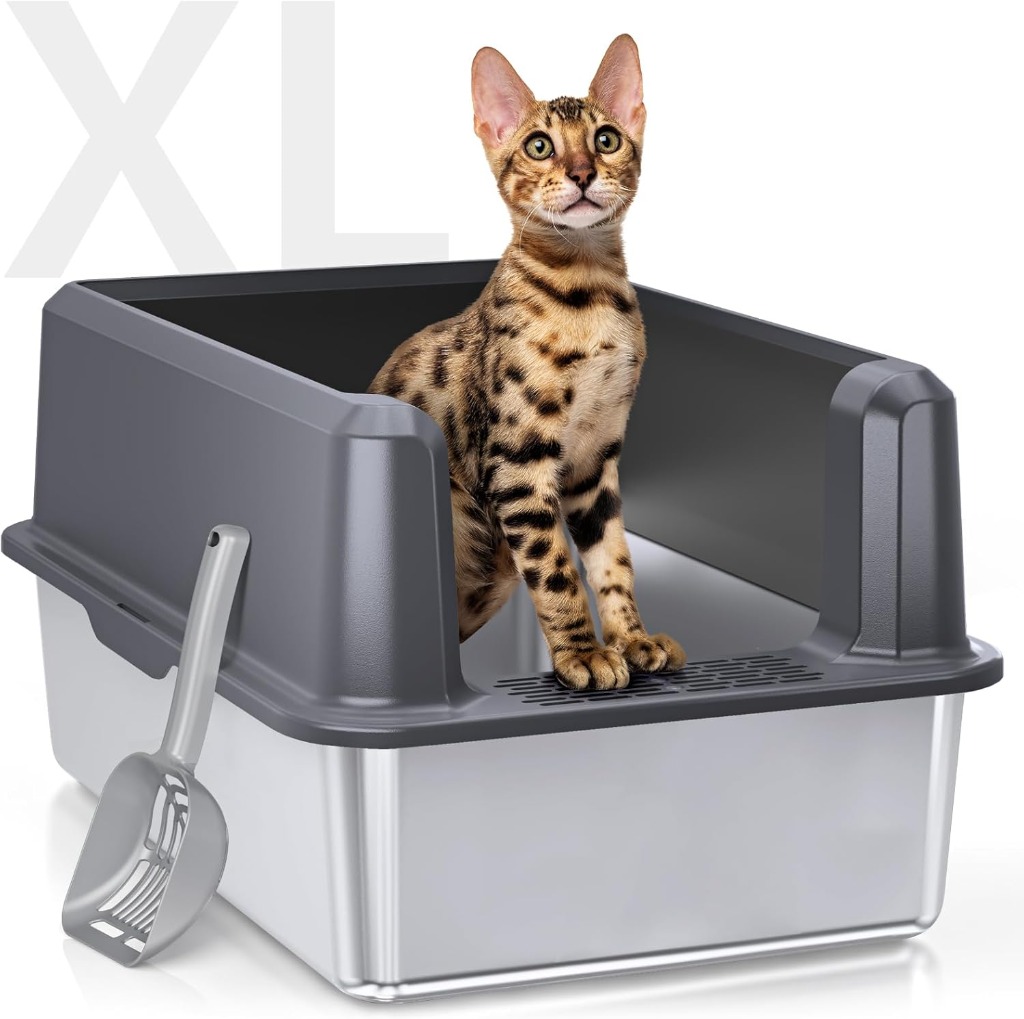
Giant size for multiple cats. Non-porous steel never holds odors or stains.
Buy on Amazon →🔗 Affiliate link — you pay the same Amazon price, we earn a small commission at no cost to you.
The Golden Rule of Multi-Cat Homes: The N+1 Formula
If there is one non-negotiable rule in multi-cat litter management, it is the N+1 rule. This scientific rule dictates that you should have one litter box for every cat in your household, plus one extra. For example, if you have three cats, you need four litter boxes. If you have five cats, you need six boxes.
Why is the N+1 rule so critical?
- Resource Guarding: In homes with multiple cats, a dominant cat may implicitly or explicitly guard a litter box. They might not actively hiss or swat, but simply resting near the only pathway to the box can deter a submissive cat from using it. Having multiple boxes ensures there is always a safe alternative.
- Cleanliness Preferences: Some cats absolutely refuse to use a box that has already been soiled by another cat—or even by themselves! Having an extra box increases the likelihood that a pristine spot is available.
- Behavioral Segregation: Some cats prefer to urinate in one box and defecate in another. The N+1 rule accommodates these idiosyncratic, innate preferences.
Strategic Placement: Location is Everything
Simply having the correct number of boxes is not enough; their placement is equally, if not more, important. A common mistake cat owners make is lining up all the litter boxes in a single row in the basement or utility room. From a feline perspective, four boxes placed side-by-side in a single room count as one giant elimination zone. If a dominant cat blocks the doorway to that room, all four boxes become inaccessible to the other cats.
The Concept of "Core Areas"
Distribute the litter boxes across different rooms, ideally in different "core areas" of your home. A core area is a space where your cats naturally spend time. If you live in a multi-story home, there should be at least one litter box on every level, providing easy access regardless of where the cat is resting.
Avoiding Ambush Zones
Cats feel vulnerable when eliminating. Litter boxes should be placed in quiet, low-traffic areas where a cat has a clear field of vision and multiple escape routes. Avoid placing boxes in closets with only one entrance, at the end of narrow dead-end hallways, or next to noisy appliances like washing machines or furnaces that could suddenly activate and startle the cat. If a cat feels they might be cornered by a housemate (or a dog, or a toddler) while in the box, they will find a safer place to go—often your bed or the living room rug.
The Anatomy of the Ideal Litter Box
When evaluating litter boxes for a multi-cat home, you must prioritize the cats' preferences over human aesthetics.
Size Matters Most
Most commercial litter boxes are simply too small for adult cats. A litter box should be at least 1.5 times the length of the cat (from nose to the base of the tail). This allows the cat to enter, turn around comfortably, dig, and bury without touching the sides. In a multi-cat home, larger boxes also provide more surface area, reducing the chances of a cat stepping on previously buried waste.
Material Selection: The Stainless Steel Advantage
Plastic litter boxes are the standard, but they have a fatal flaw: plastic is a porous material. Over time, cats' claws create microscopic scratches in the plastic. Bacteria and odor-causing molecules become trapped in these scratches, making the box permanently smelly no matter how thoroughly you wash it.
For multi-cat households where boxes see heavy use, upgrading to stainless steel is a game-changer. This is why our top recommendation is a high-quality stainless steel option like the Yangbaga Stainless Steel Extra Large Litter Box. Stainless steel is completely non-porous, meaning it never absorbs odors or stains. It is incredibly durable, rust-proof, and significantly easier to sanitize. While the initial investment is higher, a stainless steel box will literally last a lifetime, whereas plastic boxes need to be replaced annually.
Covered vs. Uncovered
While humans prefer covered boxes to hide the mess and contain odors, most cats prefer uncovered boxes. Covered boxes trap odors inside—imagine using a porta-potty on a hot day. Furthermore, covers eliminate the cat's peripheral vision and restrict escape routes, creating a prime setup for the aforementioned "ambush" by a mischievous housemate. If you must use a covered box, ensure it is exceptionally large and scooped meticulously.
🐈 Our Top Pick: Yangbaga Stainless Steel Extra Large Litter Box
Giant size for multiple cats. Non-porous steel never holds odors or stains.
Buy on Amazon →🔗 Affiliate link — you pay the same Amazon price, we earn a small commission at no cost to you.
Selecting the Right Litter: The Sensory Experience
A cat's sense of smell is roughly 14 times stronger than a human's. Their paw pads are highly sensitive and dense with nerve endings. Therefore, the texture and scent of the litter are critical factors in box acceptance.
Texture Preferences
Numerous behavioral studies have shown that the vast majority of domestic cats prefer a fine-grained, sandy texture that mimics the desert sand of their ancestors. Soft, clumping clay litters generally have the highest acceptance rates. While pellet litters (wood, paper, or breeze systems) are popular among owners for reducing tracking, many cats find them uncomfortable to walk on or difficult to dig in. If you want to change litter types, you must transition slowly, mixing the new litter with the old over a period of weeks to prevent litter box aversion.
The Scent Dilemma
Scented litters are designed for human noses, not feline ones. Floral, citrus, or pine scents can be overwhelming and aversive to cats. Always opt for unscented litter. If a litter box smells bad, the solution is to clean it more frequently, not to mask the odor with artificial fragrances.
Mastering Maintenance and Odor Control
In a multi-cat household, meticulous hygiene is the only way to prevent your home from smelling like a cattery.
The Daily Scoop Schedule
Scooping should be done at least twice a day—once in the morning and once in the evening. With multiple cats, waste accumulates rapidly. A dirty box is the number one cause of cats eliminating elsewhere.
Efficient Waste Disposal
Carrying individual plastic bags to the outside trash twice a day is tedious. Many owners fail to scoop frequently enough simply because the disposal process is annoying. To streamline your routine and eliminate odors, we highly recommend integrating a specialized disposal system right next to your primary litter stations. Using a tool like the Litter Genie allows you to scoop waste immediately into an airtight, odor-trapping pail. Its multi-layer barrier bags completely seal in smells, allowing you to store a week's worth of waste without any odor leaking into the room. Having a dedicated disposal system makes the frequent scooping required in multi-cat homes far more manageable and sustainable.
Deep Cleaning Protocol
Even with clumping litter, microscopic particles and urine droplets will eventually soil the box itself. Every 2 to 4 weeks, you must completely empty the boxes, wash them with mild, unscented dish soap and warm water, and fill them with entirely fresh litter. Avoid harsh chemicals like bleach or ammonia. Ammonia smells like concentrated urine to cats and may cause them to mark the box excessively, while strong citrus cleaners are highly repellent to them.
Diet and Hydration's Impact on the Litter Box
One often overlooked aspect of litter box management in multi-cat households is the profound impact of diet and hydration on waste output and odor. Cats are obligate carnivores, and their bodies are designed to extract maximum nutrients from animal protein. When cats are fed lower-quality diets heavily laden with carbohydrates, plant proteins, and fillers, their digestive systems cannot process these ingredients efficiently. The result is significantly larger, more frequent, and exponentially more pungent bowel movements.
In a multi-cat environment, upgrading to a high-quality, high-protein diet (whether premium dry kibble, wet food, or raw/gently cooked diets) can drastically reduce the volume and odor of the feces you must manage. Furthermore, increasing moisture intake is critical. Cats have a naturally low thirst drive. Feeding primarily wet food or employing multiple cat water fountains throughout the home encourages better hydration. Proper hydration dilutes the urine, reducing the concentration of ammonia and minimizing the sharp, stinging odor that can quickly overtake a room. Dilute urine is also a primary preventative measure against feline lower urinary tract disease (FLUTD), a frequent cause of inappropriate urination.
The Psychology of Inter-Cat Relationships and Territorial Mapping
To truly master the multi-cat environment, one must become a student of feline sociology. Cats map their territory not just visually, but chemically. When a cat uses a litter box, they are leaving behind a complex cocktail of pheromones and scents that communicate their presence, reproductive status, and stress levels to the other cats in the home.
In a peaceful, well-integrated feline family, the shared scents in the litter boxes can actually reinforce the communal "group scent" of the colony. However, in households where cats merely tolerate each other or are actively hostile, the litter box becomes a battleground of chemical warfare. One cat may intentionally leave their feces uncovered on top of the litter (a behavior known as "middening") as an overt display of territorial dominance.
If you notice a sudden change in how your cats bury their waste, or if one cat insists on immediately entering the box to cover up the waste of another, this is a clear sign of underlying social tension. Resolving this tension requires a multifaceted approach. Beyond simply adding more boxes in distinct territories, you must work on rebuilding the relationship between the cats. This can involve implementing pheromone diffusers in core areas, orchestrating supervised positive reinforcement sessions, and ensuring that no single cat can monopolize the high-value resting spots or food resources.
Senior Cats and Special Needs in Multi-Cat Environments
As your cats age, their needs regarding the litter box will evolve, and these changes can disrupt the equilibrium of a multi-cat home. Senior cats frequently develop osteoarthritis, reducing their mobility and making jumping or climbing painful. A litter box with high sides or a top-entry design, which may have been perfect when they were young agile adults, can become a daunting obstacle. In multi-cat households with mixed-age felines, you must provide variety. Alongside the large, deep boxes for the younger cats, incorporate low-entry boxes specifically designed for seniors. Ensure these accessible boxes are located on the ground floor, as elderly felines may hesitate to navigate stairs just to relieve themselves.
Additionally, cognitive decline or diminished vision can cause older cats to "forget" where the boxes are or feel disoriented in the dark. Placing small, automatic nightlights near the litter box areas can help senior cats navigate safely. You should also ensure that the younger, more boisterous cats in the household are not ambushing or harassing the senior cat while they are attempting to use the box.
Troubleshooting Litter Box Aversion
If one of your cats stops using the litter box, you must act quickly. Never punish a cat for going outside the box; this only increases their stress and exacerbates the problem.
- Veterinary Check: Always rule out medical issues first. Urinary tract infections, crystals, kidney disease, or arthritis are common culprits.
- Review the N+1 Rule and Placement: Did you recently move a box? Did you get a new dog? Evaluate the box locations for accessibility and safety.
- Clean the Soiled Areas: Use an enzymatic cleaner specifically formulated for pet urine on any accidents. Regular household cleaners will not break down the uric acid crystals, meaning the cat will still smell their previous accident and be drawn back to the same spot.
- Identify the Culprit: In a multi-cat home, it can be difficult to know who is having the accidents. You may need to temporarily separate the cats, use pet cameras, or consult your vet.
Managing Litter Tracking
With multiple cats jumping in and out of boxes, litter tracking is an inevitable challenge. To mitigate this:
- Use high-sided boxes: A stainless steel pan with high sides or an attachable shield can prevent cats from kicking litter over the edge while digging.
- Strategic Matting: Place large, dual-layer honeycomb litter mats outside the boxes. These mats gently spread the cat's toes as they walk, catching the litter in the bottom layer for easy disposal.
- Frequent Sweeping: Keep a small broom and dustpan or a handheld vacuum directly next to the litter box area to quickly handle stray granules during your twice-daily scooping routine.
The Holistic Approach to Multi-Cat Harmony
Finally, remember that litter box issues are often a symptom of broader environmental stress. Cats in multi-cat households require robust environmental enrichment to coexist peacefully. Provide plenty of vertical space (cat trees, shelving) so cats can navigate the home without forced interactions. Ensure there are multiple feeding stations, water bowls, and scratching posts distributed throughout the house. A confident, relaxed cat in a territory of abundance is far less likely to develop behavioral litter box problems.
By understanding the feline perspective, adhering strictly to the N+1 rule, optimizing box placement, investing in high-quality materials, and maintaining a rigorous cleaning schedule supported by dedicated disposal systems, you can create a harmonious, odor-free home for your entire multi-cat family.
🐈 Our Top Pick: Yangbaga Stainless Steel Extra Large Litter Box
Giant size for multiple cats. Non-porous steel never holds odors or stains.
Buy on Amazon →🔗 Affiliate link — you pay the same Amazon price, we earn a small commission at no cost to you.