The Ultimate Guide to Eco-Friendly Cat Litter: A Greener Choice for You and Your Feline
As responsible pet parents, we are constantly striving to make the best choices for our furry companions. From high-quality diets to engaging toys, every decision impacts their health and well-being. However, there is one crucial aspect of cat care that often goes overlooked when considering our environmental footprint: cat litter. If you have been scooping the same heavy, dusty clay litter for years, you might not realize the hidden environmental costs and potential health implications associated with it. Transitioning to an eco-friendly cat litter is not just a passing trend; it is a fundamental shift toward sustainable pet care that benefits your cat, your home, and the planet.
In this comprehensive guide, we will explore everything you need to know about natural and eco-friendly cat litters. We will delve into the science behind their odor-controlling properties, dissect the various materials available on the market—from tofu to walnut shells—and provide actionable advice on how to transition your stubbornly set-in-their-ways feline to a greener alternative. Whether you are looking to reduce your household waste, eliminate tracking dust, or simply find a safer option for a cat with respiratory issues, this guide has you covered.
🌱 Our Top Pick: World's Best Cat Litter (Corn-Based)
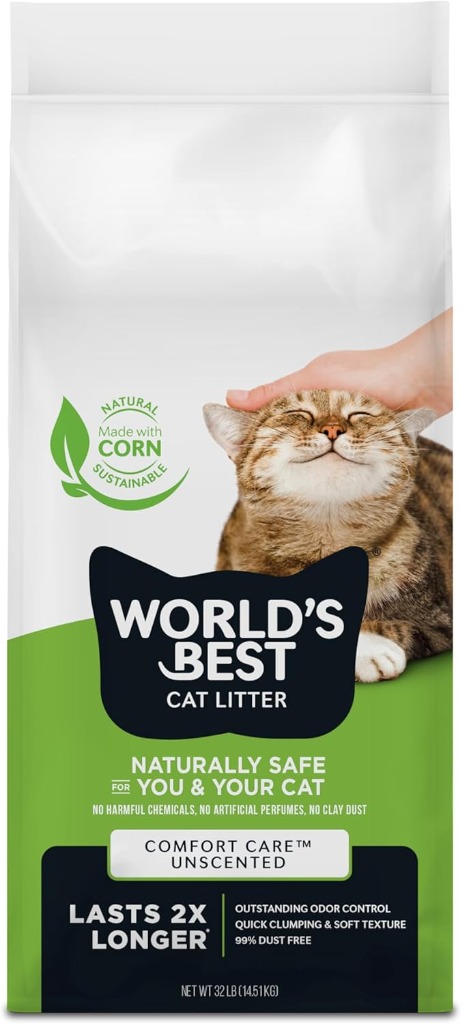
100% natural, outstanding odor control, and flushable (check local laws).
Buy on Amazon →🔗 Affiliate link — you pay the same Amazon price, we earn a small commission at no cost to you.
The Hidden Costs of Traditional Clay Litter
To truly appreciate the value of eco-friendly cat litters, it is essential to understand why traditional clay litters pose such a significant problem for the environment. For decades, sodium bentonite clay has been the gold standard for clumping cat litter. It absorbs moisture rapidly and forms hard, easily scoopable clumps. But the convenience of clay comes at a steep ecological price.
The Destructive Nature of Strip Mining
Sodium bentonite clay is not a renewable resource. It is harvested through a highly destructive process known as strip mining. This method involves removing the topsoil and vegetation from large areas of land to access the clay deposits beneath. Strip mining destroys local ecosystems, displaces wildlife, and leads to severe soil erosion and water pollution. Even when mining companies attempt to restore the land afterward, the original biodiversity is rarely recovered.
The Landfill Burden
Because clay is fundamentally rock and mineral, it does not biodegrade. Every pound of clay litter you throw away will sit in a landfill indefinitely. It is estimated that millions of tons of clay cat litter end up in landfills every single year. When mixed with cat waste and sealed in plastic bags, it creates an anaerobic environment where the waste cannot properly decompose, contributing to greenhouse gas emissions.
Health Concerns: Crystalline Silica Dust
Beyond the environmental impact, traditional clay litters often contain crystalline silica dust, a known carcinogen when inhaled in significant quantities. While the risk to humans during daily scooping may be relatively low, cats—who dig and scratch directly in the box several times a day—are much closer to the source. Over time, inhaling this dust can exacerbate feline asthma and other respiratory issues, making dust-free natural alternatives a much healthier choice.
What Makes a Cat Litter Truly Eco-Friendly?
When shopping for a green alternative, you will encounter numerous buzzwords like "natural," "biodegradable," and "sustainable." But what do these terms actually mean in the context of cat litter?
- Renewable Resources: True eco-friendly litters are made from materials that can be grown and harvested repeatedly without depleting the earth's natural reserves. Examples include wheat, corn, bamboo, and grass.
- Upcycled Materials: Some of the best natural litters use byproducts from other industries that would otherwise be thrown away, such as walnut shells from the food industry or recycled newspaper.
- Biodegradability: Unlike clay, plant-based litters will break down over time. Many are entirely biodegradable, meaning they can safely decompose in the environment.
- Safe and Non-Toxic: Eco-friendly litters are typically free from synthetic perfumes, artificial dyes, and harmful chemicals, relying instead on natural plant enzymes for odor control.
A Deep Dive into Eco-Friendly Cat Litter Materials
The market for natural cat litter has exploded in recent years, offering a wide array of textures and materials to suit both you and your cat. Let us explore the most popular options, their benefits, and their potential drawbacks.
1. Corn-Based Litter
Corn litter is one of the most popular eco-friendly alternatives to clay. Made from compressed corn kernels, it is highly absorbent and naturally forms tight clumps when exposed to moisture. The natural enzymes in the corn are incredibly effective at trapping ammonia odors.
Pros: Excellent clumping ability, lightweight, naturally controls odor, and is generally safe if accidentally ingested in small amounts. It is also completely biodegradable.
Cons: Some cats or humans may be sensitive or allergic to corn dust. Additionally, in very humid environments, corn litter can occasionally be susceptible to developing mold or attracting pests if not stored properly.
2. Wood and Pine Pellets
Pine litter is usually made from lumber scraps and sawdust that have been kiln-dried and compressed into pellets. When wet, the pellets break down into sawdust, which requires a slightly different scooping method (often using a sifting litter box).
Pros: A wonderful, natural pine scent that masks odors exceptionally well without artificial perfumes. It is highly sustainable, often made from reclaimed wood, and tracks significantly less than granular litters.
Cons: Non-clumping varieties mean you are scooping solid waste and letting the sawdust fall to the bottom to be changed later. Some cats dislike the large, firm texture of the pellets on their sensitive paws.
3. Tofu Cat Litter
Tofu litter is rapidly gaining a massive following in the eco-friendly pet community. It is made from soybean fiber—a byproduct of tofu and soy milk production. It usually comes in soft, cylindrical pellets.
Pros: Tofu litter is virtually dust-free, making it an excellent choice for cats with respiratory issues. It clumps incredibly well, tracks very little, and is extremely soft on paws. Many brands are also flushable in small quantities (always check your local municipal guidelines first).
Cons: It tends to be one of the more expensive options on the market. Some brands use artificial scents (like green tea or peach), so look for unscented varieties if you prefer a completely natural approach.
4. Walnut Shell Litter
Walnut litter is crafted from the crushed shells of English walnuts. The dark brown granules look similar to dirt, which can appeal to a cat's natural instinct to bury their waste outdoors.
Pros: Walnut shells possess an incredibly high absorption capacity and are fantastic at neutralizing odors naturally. Because it is a byproduct of the walnut processing industry, it is a highly sustainable, upcycled product.
Cons: The dark color can make it difficult to spot health issues in your cat's urine, such as blood. Some users also report a fine, dark dust that can track onto light-colored floors or carpets.
5. Wheat-Based Litter
Wheat litter uses the natural starches and enzymes found in wheat to clump and control odors. Similar to corn, it has a granular texture that mimics traditional clay.
Pros: Very soft texture that most cats adapt to easily. It flushes safely (again, check local laws) and breaks down quickly in the environment.
Cons: The clumping action is generally a bit softer than clay or corn, meaning clumps can break apart if you scoop too aggressively. It is also not suitable for households with severe wheat or gluten allergies.
6. Recycled Paper Litter
Available in both pellet and granular forms, recycled paper litter is made from post-consumer newspaper that has been sterilized and repurposed.
Pros: It is highly absorbent, upcycles existing waste, and is completely dust-free. Because of its soft texture and lack of dust, veterinarians frequently recommend paper litter for cats recovering from surgery, particularly declawing or spaying/neutering.
Cons: Paper litter does not clump, and it does not control odors as effectively as some plant-based options, requiring more frequent complete box changes.
7. Grass Seed Litter
Grass seed litter is a newer innovation made from sustainably grown grass seeds. It is incredibly fine and lightweight.
Pros: It clumps faster and harder than almost any other natural litter, rivaling even the strongest clay litters. It is lightweight, biodegradable, and offers excellent odor control.
Cons: Because it is so lightweight, it is highly prone to tracking outside the box. A good, large litter mat is an absolute necessity if you choose grass litter.
🌱 Our Top Pick: World's Best Cat Litter (Corn-Based)
100% natural, outstanding odor control, and flushable (check local laws).
Buy on Amazon →🔗 Affiliate link — you pay the same Amazon price, we earn a small commission at no cost to you.
The Science of Odor Control in Natural Litters
One of the biggest concerns cat owners have when switching away from clay is whether natural litters can handle the smell. Traditional litters often rely on artificial perfumes to mask odors and chemical additives like baking soda to absorb them. Natural litters take a different, more biological approach.
The materials used in eco-friendly litters, such as corn, wheat, and walnut, contain natural plant enzymes and porous structures. When your cat urinates, these porous materials absorb the liquid rapidly, preventing the urea from sitting exposed to the air. The natural enzymes in the plant matter actively break down the ammonia, neutralizing the odor at a molecular level rather than simply covering it up with a heavy floral scent. Because a cat's sense of smell is roughly 14 times stronger than a human's, avoiding heavy artificial perfumes is actually much less stressful and more pleasant for your feline friend.
How to Transition Your Cat to Eco-Friendly Litter
Cats are notoriously creatures of habit. They are highly sensitive to changes in their environment, especially when it comes to the texture and scent of their litter box. If you suddenly dump out their familiar clay and replace it with pine pellets, there is a very high chance they will boycott the box entirely and find a less desirable place to do their business.
To ensure a smooth transition, patience is key. Follow this step-by-step method:
- Week 1: The Subtle Introduction. Keep the box filled with 75% of their old clay litter and mix in 25% of the new natural litter. Mix it thoroughly so the texture remains mostly familiar.
- Week 2: The Halfway Point. If your cat is using the box normally, change the ratio to 50% old litter and 50% new litter.
- Week 3: The Tipping Point. Move to 25% old litter and 75% new natural litter. Monitor your cat's behavior closely to ensure they aren't hesitating before entering the box.
- Week 4: Full Transition. You can now use 100% of the new eco-friendly litter.
If at any point your cat starts having accidents outside the box or shows signs of distress, take a step back to the previous week's ratio and hold there for a little longer. It is much better to take a slow, successful month to transition than to rush it and cause behavioral issues.
Eco-Friendly Waste Management: Beyond the Litter
Choosing an eco-friendly cat litter is a fantastic first step, but the sustainability of your cat care routine does not end there. Consider how you are disposing of the waste. If you are scooping biodegradable corn litter into a single-use plastic grocery bag every day, you are essentially entombing that biodegradable material in plastic that will take centuries to break down, largely defeating the purpose of your switch.
For ultimate convenience and odor control without wasting a ton of single-use plastic bags daily, many responsible cat owners rely on specialized disposal systems. Using a dedicated waste pail along with the Litter Genie Refill Bags 6-Pack creates an extremely efficient, odor-locking setup. The continuous refill bags last for months, meaning you use exactly the amount of plastic film you need. This drastically reduces the overall volume of plastic waste compared to individually bagging daily scoops in separate shopping or trash bags. Alternatively, if your local municipality permits it and you are using a certified flushable litter, flushing the waste (sans plastic, of course) can be an option, though you should never flush cat feces if your cat goes outdoors due to the risk of toxoplasmosis entering the water supply.
The Cost of Eco-Friendly Litters: An Investment in Health
A common misconception is that natural litters are prohibitively expensive. While it is true that a 10-pound bag of premium tofu or walnut litter may cost more upfront than a 10-pound bag of basic clay, you have to consider the long-term value and usage rates.
Natural litters are significantly lighter and often more absorbent than clay. A 10-pound bag of corn litter will yield a much higher volume and last much longer than 10 pounds of dense clay. Because many natural litters clump so tightly, you end up throwing away less clean litter during the scooping process. Over the course of a month, the actual cost difference is often negligible. Furthermore, when you factor in the potential savings on veterinary bills by avoiding respiratory issues caused by clay dust, investing in a high-quality natural litter is a financially sound decision.
Addressing Common Myths About Natural Litter
Despite their growing popularity, several myths still surround eco-friendly litters. Let us set the record straight.
Myth 1: "Natural Litters Don't Clump Well"
Fact: While early iterations of natural litters may have struggled, modern options like grass seed, corn, and tofu clump incredibly well. Grass seed litter, in particular, forms rock-hard clumps that rival the performance of the strongest clay products.
Myth 2: "They Attract Bugs and Pests"
Fact: Because materials like corn and wheat are food-based, people worry about attracting insects. However, these litters are processed and dried to a point where they are not appealing to pests. As long as you store the litter in a cool, dry place and scoop the box daily, pest issues are incredibly rare.
Myth 3: "You Can Flush Any Natural Litter"
Fact: Always read the manufacturer's packaging. While many natural litters are technically flushable, older plumbing systems or homes with septic tanks may not be able to handle the volume. Flush only small clumps at a time, and always adhere to your local water authority's guidelines regarding pet waste disposal.
Conclusion: A Small Change for a Greener Planet
Switching to an eco-friendly cat litter is one of the most impactful, positive changes you can make as a cat owner. Not only are you actively reducing the devastating effects of strip mining and minimizing the burden on our overflowing landfills, but you are also creating a safer, healthier, and more pleasant home environment for both you and your feline companion.
The variety of natural litters available today means there is a perfect option for every household. Whether you prioritize the incredible clumping power of grass seed, the absolute dust-free nature of tofu, or the sustainable upcycling of walnut shells, the power to make a greener choice is right at your fingertips. By taking the time to transition your cat patiently and combining your new litter with smart waste management practices, you can proudly maintain a pristine home while doing your part to protect the planet.
🌱 Our Top Pick: World's Best Cat Litter (Corn-Based)
100% natural, outstanding odor control, and flushable (check local laws).
Buy on Amazon →🔗 Affiliate link — you pay the same Amazon price, we earn a small commission at no cost to you.